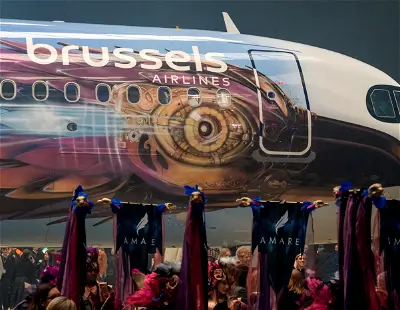
The Star Mega Dos and One World Mega Dos, whereby frequent flyer nerds charter planes and attend all kinds of industry events, are among the coolest frequent flyer events out there. This year marks the fifth Star Mega Do, and tickets for this year’s  event go on sale at noon central time today, Monday, May 20.

All the details can be found on the Star Mega Do website and the corresponding Milepoint thread.

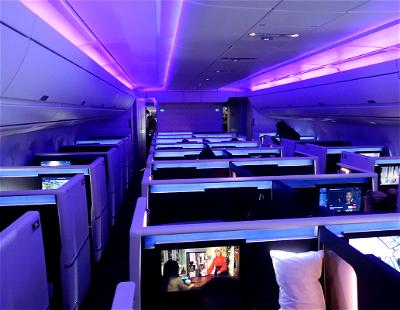
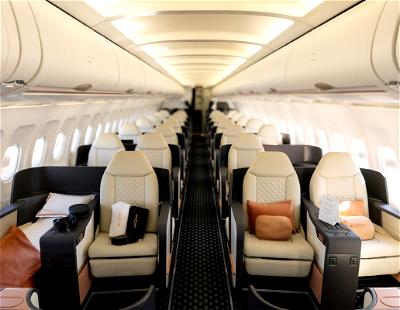
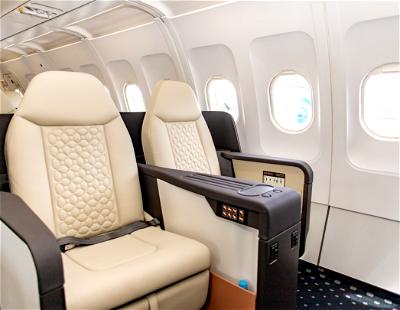
This charter will run from October 22-25, and will be on an Air Canada A321, with travel from Toronto to San Francisco via Tucson, with events all along the way. Tickets start at $1,199 for coach, $1,799 for Tommy Class (coach with a blocked middle seat), $1,999 for Tommy Class in the exit row (also with a blocked middle seat), and $2,799 for business class. The event even comes with 2,500 EQMs for coach, 7,500 EQMs for Tommy Class, and 15,000 EQMs for business class. The cost includes the flights, bus transportation, dinner receptions, and more.

Anyway, the event usually sells out within seconds, so if you’re interested be sure you’re at this page by noon central.

Good luck!

Through June 13, 2013, British Airways is offering tiered bonuses on the purchase of Avios, up to the maximum of 24,000 Avios per account per calendar year. The bonus tiers are as follows:

So basically if you max out this promotion you get 31,000 Avios for $685, making them ~2.2 cents per Avios.

Is that a rate at which I’d proactively buy Avios? Heck no. British Airways partners with American Express Membership Rewards, Chase Ultimate Rewards, and Starwood Preferred Guest, so their points aren’t too difficult to come by. There’s even a 35% transfer bonus from Membership Rewards through June 7.

But assuming you have none of those points currencies, there are still circumstances under which it could make sense to purchase points. Say your family of six wants to fly from Los Angeles to Monterey tomorrow (doesn’t everyone’s family?). For only 4,500 Avios per person you could get seats on American Eagle (a total of 27,000 Avios).

Meanwhile revenue tickets would cost $225 per person.

So yeah, there are circumstances where this can make sense, but they’re few and far between. And with proper planning you should have enough points currencies that convert into Avios so you’re never in a bind.

Introduction
Aloft San Francisco Airport
Cathay Pacific Lounge San Francisco
Cathay Pacific First Class San Francisco to Hong Kong
Cathay Pacific First Class Hong Kong to Singapore
St. Regis Singapore
Singapore Airlines Silver Kris Lounge Singapore
SilkAir Business Class Singapore to Koh Samui
Conrad Koh Samui
Bangkok Airways Economy Class Koh Samui to Bangkok
Le Meridien Bangkok
Royal Jordanian Business Class Bangkok to Hong Kong
Cathay Pacific “The Wing” First Class Lounge Hong Kong
Cathay Pacific First Class Hong Kong to San Francisco


While a coach flight within Thailand is hardly an aspirational travel experience worth writing about, I have to say that Bangkok Airways is one of the most unique airlines I’ve flown. They market themselves as “Asia’s boutique airline,” as they offer some pretty elaborate meal services on short flights and also have lounges for all passengers. And for that matter Koh Samui Airport is an equally unique airport, so hopefully you guys find this interesting.

As I said in the introduction, our coach tickets cost a bit over $100USD per person, which was reasonable. Business class is only a mild premium, though for our date unfortunately the only flight with availability was one of their single cabin A319s, not featuring a business class cabin.

The first thing to note is that just for joining Bangkok Airways’ frequent flyer program, FlyerBonus, you get an extra 10kg baggage allowance. So before flying with them be sure you join if you intend to check a bag. Their normal baggage allowance is 20kg (~44 pounds), so just for being a member you get a 30kg (~66 pounds) baggage allowance. If you’re connecting off an international premium cabin itinerary with heavy bags, that will save you a lot of money.

We were able to check out of the Conrad at 4PM, and made it to the airport by 4:45PM for our 6:50PM flight. The airport is entirely “open air,” so originally I was dreading the time we’d have to spend outside, given that it was close 100 degrees. We were dropped off right in front of the Bangkok Airways check-in counter.


Check-in

The check-in queues were crazy. I mean, literally the longest airport queues I’ve ever seen anywhere. It’s not really surprising, given just how many flights Bangkok Airways has out of Koh Samui. Heck, between 6PM and 7PM they had three flights to Bangkok alone, not factoring in their other destinations.


Check-in queues


Check-in queues

And this is where the next tip comes into play — just for doing online check-in you get access to their business class check-in queue. The main queue must have been over an hour long, while there were only two parties ahead of us in the business class line. So be sure to do online check-in.


Web check-in queues Read More…

While Hyatt and Starwood do a lot to differentiate between mid-tier and top-tier status, Hilton and Marriott are kind of the opposite — they don’t do enough to differentiate between mid-tier and top-tier status.

Last year I got the Citi® Hilton HHonors™ Reserve Card (affiliate link), which comes with Hilton HHonors Gold status for as long as you have the card. That’s a huge benefit for a $95 annual fee, given that Gold status gets you complimentary internet and breakfast/lounge access. As far as I’m concerned those are the single most valuable hotel benefits, and justify the annual fee after just one or two stays.


Conrad Singapore Executive Lounge

But the card also offers Diamond status after spending $40,000 on the card in a year. While having the card for Gold status is a no brainer, for the better part of a year I’ve been pondering whether it makes sense to put $40,000 of spend on the card for Diamond status. As far as I’m concerned the two most valuable benefits of Diamond status are as follows:

  • Gold members only get access to the club lounge if they get upgraded to a club room, while Diamond members are guaranteed lounge access (though it’s worth noting that if you don’t get upgraded to the club level as a Gold member you get restaurant breakfast, which many would consider superior).
  • The terms & conditions of the program give Diamond members suite upgrades at the hotel’s discretion. This is different than Starwood where Platinum members get guaranteed suite upgrades based on availability at arrival, but instead with Hilton it’s entirely at the hotel’s discretion. I don’t think there are many Hilton Diamond members getting suite upgrades anywhere close to a majority of the time, though.

In retrospect I should have probably just been happy with Gold status, though I had started working towards the $40,000 of spend before the HHonors devaluation was announced, and at that point figured I might as well go all the way, and now I’m a Diamond member. If it proves worthwhile, great. If it doesn’t, at least I can report back and suggest others don’t go for Diamond status.

I’ve actually had very good luck as an HHonors Gold member. I’ve never been denied lounge access. That being said, I can appreciate the peace of mind of knowing it’s guaranteed. But the suite upgrade benefit is what confuses me, and what I’d love to hear from existing Diamond members about. I also have top tier status with Hyatt and Starwood, and their room upgrade policies are straightforward. Hyatt upgrades you to the best available non-suite, though also gives you four confirmed suite upgrades annually that can be used to lock in a suite at the time of booking. Meanwhile Starwood upgrades you to the best available standard suite at check-in, meaning if a suite is available you’re entitled to it (not saying it always goes that smoothly, but that’s the policy). If you get 50 elite night credits with them, they also give you 10 suite night awards, which can confirm a suite upgrade five days out.

Then you have Hilton, which has this confusing benefit (bolding mine):

Complimentary room upgrades for Gold and Diamond HHonors members may include the next-best available room from the room type booked. Upgrades may also be rooms with desirable views, corner rooms, rooms on high floors, rooms with special amenities, or rooms on Executive Floors, as identified by each property. Room upgrades, for Diamond members only, may also include suites.

The suite upgrade benefit is actually new as of last year. So if my interpretation is correct you receive suite upgrades at the hotel’s discretion. It doesn’t matter whether there are 100 suites available, what matters is the mood of the front desk agent. So, Diamond members, how do you approach suite upgrades at Hilton hotels. Do you:

a) Not care and let them assign you whatever they want?
b) Ask nicely at check-in whether they might have any suite upgrades available?
c) Be a bit more suggestive and say “I noticed online that you’re still selling suites for tonight, do you have any suite upgrades available?”
d) Pull out your Diamond card and pet giraffe, and refuse to move until they give you the presidential suite and waive the pet cleanup fee?

And how often do you actually get suite upgrades?

Staying at my first Hilton abroad as a Diamond member next week, so I want to be sure I’m using the right approach.

Lufthansa offers one of my favorite first class products in the world, though unfortunately over the past few years it has become progressively more difficult to redeem miles for it. They only release first class award space to partner airlines at most ~15 days before departure, and even within that timeframe I’ve found they’re becoming stingier with releasing award space to the point that it’s tough to even find one first class award seat within a few days of departure in many of their premium markets (basically anywhere other than Atlanta, Dallas, Detroit, Montreal, Vancouver, etc.).

One thing that causes a lot of confusion regarding Lufthansa first class award space is that for over a year now United’s website has been showing phantom first class award availability on Lufthansa. Not only has United’s website shown Lufthansa first class award space more than ~15 days out that wasn’t actually available, but it has also not shown the correct award space within the timeframe where it’s actually released. In other words, United’s website has been utterly useless for searching Lufthansa first class availability. That’s not a huge deal, given that the ANA website can be used to accurately search Lufthansa first class award space, though it is a bit of a pain to use since you have to search route by route.

There’s finally good news as of a few days ago, though — best I can tell United has fixed their phantom Lufthansa first class award availability issue for the most part. For one, I no longer see them incorrectly showing Lufthansa first class award space more than ~15 days out. I also find that when the United website shows Lufthansa first class award space within ~15 days of departure, it’s accurate.

However, there’s one case in which I don’t find availability displayed by United to be accurate. Take a look at space from Frankfurt to Detroit in first class, for example. ANA shows award space every day between May 22 and June 2, which is 15 days from now.

United.com shows award space for all those dates as well, except June 2. When I checked about eight hours ago (Saturday afternoon) it didn’t show space for June 1 either. So it seems now that United’s website is only showing space for travel within 14 days. That means if Lufthansa releases award space 15 days out, United’s website won’t immediately pick it up. I’m willing to bet that in another 24 hours United’s website will show the space for June 2 as well.

But since award availability can accurately be searched on ANA’s website, why should you care about United’s website now displaying Lufthansa first class award space accurately (for the most part)?

Because ExpertFlyer.com lets you set availability alerts for flights, whereby they’ll email or text you when the space you’re looking for opens up (you specify the flight and fare class you’re looking for). Up until now this has been useless for Lufthansa first class, because ExpertFlyer is pulling their availability from United’s website. That means if United’s website was incorrectly showing Lufthansa first class award space you’d get an alert. Similarly if Lufthansa first class award space was actually available but just wasn’t showing on United’s website, you wouldn’t get an alert.

Anyway, Lufthansa first class award space is tougher than ever before to find, so being able to set ExpertFlyer alerts and getting accurate results is more valuable than ever. Here’s a post I wrote on how to use ExpertFlyer to set award availability alerts.


Hopefully this makes finding Lufthansa first class award space with partner miles a bit easier…

Reader Brad sent me an email asking the following:

I just tried to book an award ticket using American miles from Los Angeles to Hong Kong by way of New York. In a previous post you wrote this should be allowed since it does not exceed the MPM by more than 25%, yet the agent told me that routing would require two awards. Any clue why?

I believe Brad is referring to this post, in which I covered three major topics related to redeeming American AAdvantage partner awards, which I’ll very briefly recap:

1) American will let you exceed the maximum permitted mileage (MPM) for a city pair by up to 25% on an award reservation. For example, from Los Angeles to Hong Kong the MPM is 8,698 miles, and 25% more than that is 10,872 miles. Los Angeles to New York to Hong Kong is 10,547 miles, so in theory it should be allowed.

2) In order for an award routing to be legal, the transoceanic carrier has to publish a fare between the origin and destination. For example, Etihad publishes a fare between New York and Male, but not between Tampa and Male. So if you want to fly to Male using American miles on Etihad, you’d have to book your ticket from Tampa to New York separately.

3) On an award you can’t transit a third region (other than the region of your origin and destination), unless it falls on the exception table, listed in this post.

But back to the point of this post. Should Brad be allowed to route from Los Angeles to Hong Kong via New York since it exceeds the MPM by less than 25%? Sort of.

American has seemingly contradictory policies. On one hand they say you exceed the MPM by up to 25%, but on the other hand they also say say that “passenger must travel the most direct routing.” Those two seemingly contradict one another, don’t they?

That’s because American’s award routing rules are based on intent and not necessarily numbers. Back in the day mileage running was great because most airlines would let you make three or four connections in each direction on a domestic ticket. Why? Because the assumption was that nobody on earth would want to fly more than they have to, and that if someone was making multiple connections it was out of necessity based on availability. Of course we proved them wrong, and over the past few years airlines have tightened up the fare rules on domestic tickets, now that they’ve seen some of us actually do like making extra connections to earn more miles.

I think what it all comes down to is this clause from a memo on flex awards that’s posted on Traveling Better, which I think seems to apply to most American awards nowadays:

The number of awards assessed should be determined by the customer’s intentions. If the indirect routing is booked at the customer’s request, multiple awards should apply using Pricing Override Options – Force Fare Breakpoint. If the routing is booked based on lack of award availability on direct routes, then an exception may be made, allowing Sabre to price as one award.

So basically you should be allowed to exceed the MPM by up to 25%, but only if it’s not your intention to do that. So if you’re still intent on routing via New York, perhaps approach this a bit differently. When you call American don’t say “I’d like to fly from Los Angeles to Hong Kong via New York. I have the flights that are available, so may I give them to you?” Perhaps instead ask what’s available, and when they can’t find anything, say “shoot, I really need to fly on those dates, do you mind maybe checking award space via another Cathay Pacific gateway city?” See if they’ll suggest New York, which they might if they’re creative. Otherwise it can’t hurt to suggest it at that point if they don’t.

So it’s odd for a company this big to have rules based on intentions and not purely what the computer will price, though hopefully by understanding this you can modify your approach towards booking a “complex” routing using an AAdvantage partner award.

The past few weeks we’ve seen United, US Airways, Delta, and American all raise their change fees. As a consumer this has been extremely aggravating to watch, because change fees in no way reflect the cost of providing that service. We might not like paying for checked bags, but at the end of the day we can rationalize the fact that checking bags costs the airline money. Meanwhile with change fees, if I book a ticket 11 months out and decide to cancel it two days later, what exactly am I paying $200 for? I’m not really costing the airline anything, it’s not close enough to departure that I was preventing someone else from snagging that seat.

So while we’ve seen the legacies match one another, I was kind of curious to see how the low cost carriers would react. JetBlue announced an increase in change fees today, though it’s not a change that really makes my blood boil.

Their change fees used to be $50-100 depending on how expensive the ticket was, though now they’re as follows:

Changes and cancellations made 60 days or more prior to departure date:

  • $75 per person fee

Changes and cancellations made within 60 days of departure date:

  • $75 per person fee for fares under $100
  • $100 per person fee for fares between $100 – $149
  • $150 per person fee for fares $150 or more

So do I like the fact that they’ve increased their change fees? Of course not. But I can appreciate the fact that they differentiate between someone making a change more than 60 days out and someone making a change closer to departure, since there very often is a cost to a passenger canceling a seat close to departure, given that they may not be able to resell it.

Also, I can appreciate the fact that they have different change fees for different fare types within 60 days of departure. Now, as you’ll see the fees are structured in such a way that not a whole lot of value will be left over after the fee, but it’s still better than a flat $200 fee, or whatever.

Meanwhile members of JetBlue’s Mosaic program get a pretty nifty new perk as of today — no change or cancellation fees!

This is probably my single favorite perk of being MVP Gold with Alaska — you don’t pay change or cancellation fees, so when you cancel a ticket the funds can go back into your “travel wallet.” Selfishly one of the reasons I’m happy to see JetBlue add this perk is because I think it’s now less likely that Alaska will get rid of the perk.

So while I really hate an airline raising their change fees, I do appreciate the logic behind it here. They’re recognizing that those cancelling far out are costing them less than those cancelling close to departure. They’re realizing that not all fare types deserve the same change fee. And they’re also realizing that elite members deserve a break sometimes.

So in a very backhanded way, I guess kudos(ish) JetBlue?

My Friend Eric sent me a link to a pretty awesome post by Beijing Cream (yes, I’m as puzzled and concerned by the name as you are, including his page called “The Cream Factory”) entitled “The Anatomy of a Chinese Airport Rumble.” It’s pretty friggin’ awesome, though if you want a 40 second summary, here it is:

Why are you going to want to read the story? Because the guy trying to throw the chair and being restrained is supposedly a manager for the airline.

(Tip of the hat to Eric)

Introduction
Aloft San Francisco Airport
Cathay Pacific Lounge San Francisco
Cathay Pacific First Class San Francisco to Hong Kong
Cathay Pacific First Class Hong Kong to Singapore
St. Regis Singapore
Singapore Airlines Silver Kris Lounge Singapore
SilkAir Business Class Singapore to Koh Samui
Conrad Koh Samui
Bangkok Airways Economy Class Koh Samui to Bangkok
Le Meridien Bangkok
Royal Jordanian Business Class Bangkok to Hong Kong
Cathay Pacific “The Wing” First Class Lounge Hong Kong
Cathay Pacific First Class Hong Kong to San Francisco


As I discussed in the introduction post, while the initial plan for this trip was to go to Bali, Hilton’s decision to more or less castrate their HHonors program caused us to change our plans and go to Koh Samui instead. The Conrad was available for four nights on an AXON award (available to those with a co-branded Hilton American Express card) for 145,000 points. The hotel went from ordinarily costing 50,000 points per night to 95,000 points per night. Meanwhile category 10 AXON awards will cost 300,000 points starting in a few weeks, meaning the cost of this stay has more than doubled.

The Conrad is an all villa property located on the southern tip of Koh Samui, almost exactly on the opposite side of the island as the airport. We had arranged transport with the hotel in advance, and it cost about $50USD for the hotel’s Toyota SUV (which was comfortable). The ride to the hotel took just a bit under an hour, and the last part of the drive was especially interesting, as we drove up a series of extremely steep hills to the top of the resort.

At the top of the hill was the resort’s reception area, which was open air. The views were stunning.


Resort entrance


View from the resort’s driveway


View from the lobby

It was early, still before 11AM, so they asked us to take a seat while they processed our check-in. They also offered us cold towels and some tea.


Cold towels and tea Read More…

Reader Andrew asked the following on the “Ask Lucky” page of the blog:

Any idea if Chase is going to return the $300/30,000 point bonus for the Freedom card? Have the Chase Sapphire, so would like the points, but 10,000 is low right now.

While I have no inside information, I’ve been putting some thought into this question, or more generally what I imagine Chase’s strategy to be the past year or so. Going back a few years American Express hands down had the most valuable consumer credit cards. However, Chase has quickly gained market share, and I’d argue on the whole now has more valuable cards for the savvy consumer (though there are cards with both issuers that are “must haves”).

I think the biggest growth we’ve seen at Chase is with non co-branded credit cards that accrue Ultimate Rewards points and not points in any of their co-branded points programs (like United MileagePlus, Hyatt Gold Passport, etc.). This essentially makes these “super-cards,” given that you can accrue points in a central currency, and later decide where you want those points transferred to. And while the cards that accrue Ultimate Rewards points have annual fees, they offer an extraordinary amount of value. The Chase Sapphire Preferred® Visa Card accrues double points on dining and travel and offers a further 7% annual points dividend, while the Chase Ink Plus® Business Card and Chase Ink Bold® Business Card offer 5x points on the first $50,000 spent annually at office supply stores, and on cellular phone, landline, internet, and cable TV services, and double points on the first $50,000 spent annually at gas stations and on hotels.

Both of these cards have annual fees of $95 which are waived for the first year, though don’t really offer any other annual “bonus” which incentvizes customers to keep the card. But for most, the sheer number of points you can earn thanks to the bonus categories more than justify the annual fee.

Interestingly a majority of co-branded Chase cards (including Hyatt, Priority Club, etc.) offer an annual bonus just for keeping the card. It basically makes the card a keeper regardless of whether you plan on using it or not. This is unique because there aren’t many American Express cards I can think of that offer such a bonus.

So with that in mind, my perception is that Chase thinks of both the Ultimate Rewards branded and co-branded credit cards as being more in the “stable” phase than the “let’s-grow-the-heck-out-of-it” phase. And I say that simply because they’re not offering mega sign-up bonuses for the most part anymore, at least not like in the past. I think there are exceptions, like the Chase Ink Bold and Chase Ink Plus where Chase continues to offer 50,000 point sign-up bonuses, mainly because it seems they still want to largely grow their business credit card division.

This brings us to the Chase Freedom® Visa Card, which is one of the most unique “valuable” Chase cards out there, given that it has no annual fee. Not the first year, not ever. The card is valuable because it offers 5x points in rotating quarterly categories for up to $1,500 of spend. This basically translates into an easy 30,000 points per year. It’s worth noting each point can be redeemed for 1% cash back, though if you link it to an Ultimate Rewards branded card, they can also turn into Ultimate Rewards points. As a result the card has been getting more popular, because it’s not just worthwhile for people looking for 5% cash back, but it’s also worthwhile for people looking for five Ultimate Rewards points per dollar.

Over a year ago we saw sign-up bonuses on the card ranging from 20,000-30,000 points, though nowadays it’s at 10,000 points after spending $500 within three months.

Could we see that bonus again? Sure, it’s definitely possibly. Is it likely? I don’t think so. This is a no annual fee credit card and I think the reason behind the higher bonus while the Chase Sapphire Preferred, Chase Ink Bold, and Chase Ink Plus cards were being promoted, was to try and get people engaged in the Ultimate Rewards program. I think Chase is done trying to promote the Freedom Card as an every day spend card, but rather all the branding focuses around the 5x points category, which is the card’s “hook.” And that makes sense because while a 1% cash back credit card might have been competitive a few years ago, it’s not anymore. Now that people are sufficiently engaged in the Ultimate Rewards program, they really don’t have to offer a huge sign-up bonus on the card anymore.

Anyway, just my guess, though hope I’m wrong. I’m going to be picking up the Freedom in my next round of credit card applications since I’ve had so many other cards I’ve prioritized over it, but at the end of the day not having it is costing me ~24,000 Ultimate Rewards points per year.

Has anyone else been holding off in hopes of a better sign-up bonus?

(In the interest of full dislcosure I earn a referral bonus for anyone that’s approved through the above links. Thanks for your support!)

« previous home top

One Mile at a Time is owned by Points Pros, Inc. Some links to credit cards and other products on this website will earn an affiliate commission, and this website has a financial relationship with several credit card issuing banks. All content unless otherwise noted or quoted is the author's own, and not provided or commissioned by any other entity. This site is for entertainment purpose only. The owner of this site is not an investment advisor, financial planner, nor legal or tax professional and articles here are of an opinion and general nature and should not be relied upon for individual circumstances.

Disclaimer: This content is not provided or commissioned by the credit card issuer. Opinions expressed here are author’s alone, not those of the credit card issuer, and have not been reviewed, approved or otherwise endorsed by the credit card issuer. This site may be compensated through the credit card issuer Affiliate Program.