
Introduction
Aloft San Francisco Airport
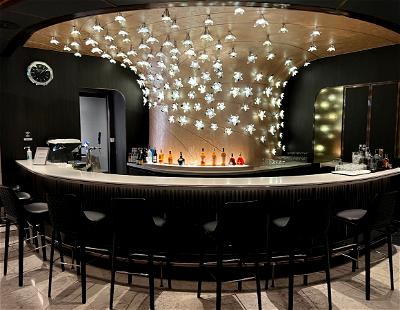
Cathay Pacific Lounge San Francisco
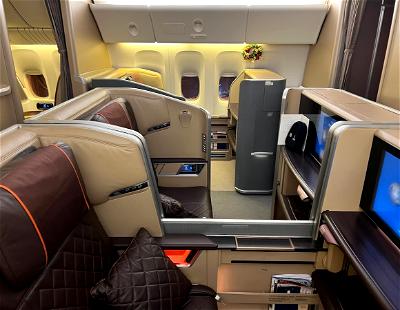
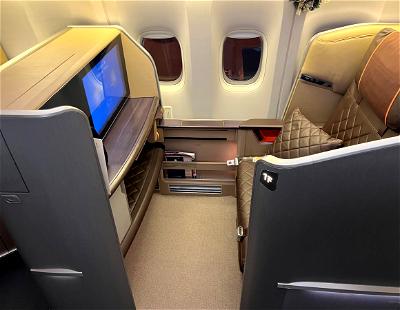
Cathay Pacific First Class San Francisco to Hong Kong
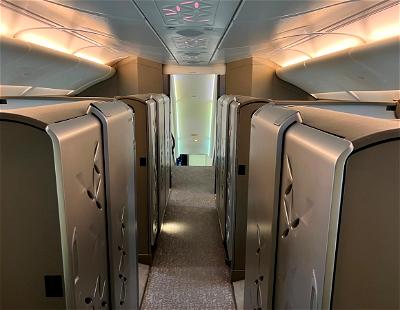
Cathay Pacific First Class Hong Kong to Singapore
St. Regis Singapore
Singapore Airlines Silver Kris Lounge Singapore
SilkAir Business Class Singapore to Koh Samui
Conrad Koh Samui
Bangkok Airways Economy Class Koh Samui to Bangkok
Le Meridien Bangkok
Royal Jordanian Business Class Bangkok to Hong Kong
Cathay Pacific “The Wing” First Class Lounge Hong Kong
Cathay Pacific First Class Hong Kong to San Francisco


SilkAir 772
Singapore (SIN) – Koh Samui (USM)

Monday, March 25
Depart: 9:00AM
Arrive: 9:50AM
Duration: 1hr50min
Aircraft: Airbus A319
Seat: 2C (Business Class)

Upon boarding we were welcomed by two flight attendants dressed in bright orange and green uniforms. They directed us to our seats in row two.


View of the coach cabin from business class

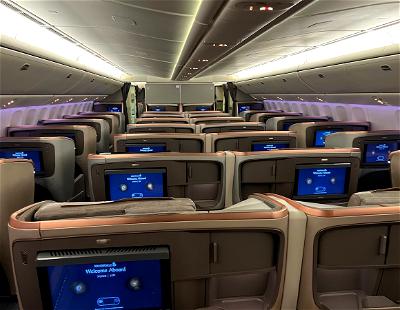
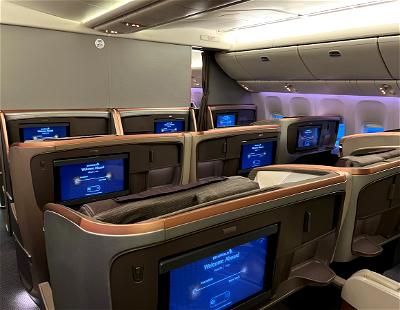
The SilkAir A319s have eight business class seats, each with about 40 inches of pitch (slightly more than domestic first class in the US). At each seat was a pillow and blanket.


Our seats


Legroom

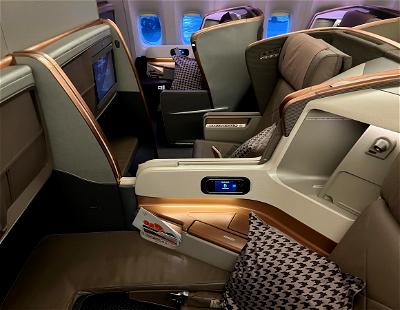
Each seat had a legrest which wasn’t especially useful with only 40″ of pitch, and three manual control levers on the right side of the seat.


Seat controls Read More…

Introduction
Aloft San Francisco Airport
Cathay Pacific Lounge San Francisco
Cathay Pacific First Class San Francisco to Hong Kong
Cathay Pacific First Class Hong Kong to Singapore
St. Regis Singapore
Singapore Airlines Silver Kris Lounge Singapore
SilkAir Business Class Singapore to Koh Samui
Conrad Koh Samui
Bangkok Airways Economy Class Koh Samui to Bangkok
Le Meridien Bangkok
Royal Jordanian Business Class Bangkok to Hong Kong
Cathay Pacific “The Wing” First Class Lounge Hong Kong
Cathay Pacific First Class Hong Kong to San Francisco


We arrived at Changi Airport terminal two at around 7:30AM.


Terminal exterior


Terminal interior


Departures board

We quickly found the SilkAir business class check-in counter, where there was no queue. Within a couple of minutes our boarding passes were printed and we were invited to use the Silver Kris Lounge.


SilkAir check-in Read More…

Introduction
Aloft San Francisco Airport
Cathay Pacific Lounge San Francisco
Cathay Pacific First Class San Francisco to Hong Kong
Cathay Pacific First Class Hong Kong to Singapore
St. Regis Singapore
Singapore Airlines Silver Kris Lounge Singapore
SilkAir Business Class Singapore to Koh Samui
Conrad Koh Samui
Bangkok Airways Economy Class Koh Samui to Bangkok
Le Meridien Bangkok
Royal Jordanian Business Class Bangkok to Hong Kong
Cathay Pacific “The Wing” First Class Lounge Hong Kong
Cathay Pacific First Class Hong Kong to San Francisco


I have a confession to make. Even though I (in part) plan other peoples’ travel for a living, I suck at planning my own trips. This is probably because I’m both a perfectionist and have tried just about every premium cabin product out there, so I’m always looking for a new “high,” though I’ve come to realize there are very few new “highs” out there.

The trip planning started innocently enough. Last April I booked a Cathay Pacific first class ticket to Bali for this March. As an Executive Platinum member with American I can always make changes or even cancel as the departure date approaches at no cost, and the fact is that Cathay Pacific first class award space is outrageously good, especially out of San Francisco. They usually release two first class award seats per flight, and at 135,000 AAdvantage miles per passenger it’s an absolute bargain.

But as the departure date approached my trip changed completely. Not only that, but I dragged someone along with me thanks to how good last minute space is. As a matter of fact not a single segment remained the same as I originally planned, and I made changes literally up until two hours before departure for the outbound, and changes to the return while in Asia.

Initially the idea was to go to Bali, but once the Hilton devaluation was announced I figured going to the Conrad Koh Samui would make more sense given how much it’s going up in price. The issue is that OneWorld doesn’t fly to Koh Samui, so it’s not quite that straightforward. You really have a few options for getting there. You can book Cathay Pacific as far as Singapore and then grab a SilkAir flight from Singapore to Koh Samui, you can fly Cathay Pacific as far as Bangkok and then grab a Thai Airways or Bangkok Airways flight from Bangkok to Koh Samui, or you can fly Dragonair as far as Phuket and grab a Bangkok Airways flight from there to Koh Samui. There are other ways too, but those are the easiest.

I’ll spare you guys the gory planning details, but in the end the routing looked as follows:

3/22 AS328 Seattle to San Francisco departing 2:00PM arriving 4:19PM
3/23 CX873 San Francisco to Hong Kong departing 12:05AM arriving 6:00AM (+1 day)
3/24 CX691 Hong Kong to Singapore departing 8:00AM arriving 11:50AM
3/25 MI772 Singapore to Koh Samui departing 9:00AM arriving 9:50AM
3/29 PG1172 Koh Samui to Bangkok departing 6:50PM arriving 7:55PM
3/30 RJ182 Bangkok to Hong Kong departing 3:25PM arriving 7:00PM
3/31 CX872 Hong Kong to San Francisco departing 12:30AM and arriving 10:10PM (-1 day)
3/31 AS311 San Francisco to Seattle departing 9:15AM and arriving 11:17AM

As I mentioned earlier, the “shell” of the trip was taken care of with 135,000 AAdvantage miles per person in first class, which included the segments between Seattle and San Francisco, San Francisco and Hong Kong, Hong Kong and Singapore, Bangkok and Hong Kong, Hong Kong and San Francisco, and San Francisco and Seattle. The total taxes on that ticket were about $100.


Cathay Pacific first class

Then in Singapore I decided to book the St. Regis. As I wrote about in this blog post, I find Singapore to be one of the most frustrating hotel markets for those trying to redeem points. I’ve stayed at the Conrad, Crowne Plaza, Grand Hyatt, InterContinental, Marina Bay Sands, and Shangri-La. So I figured it was finally time to try the St. Regis, especially given we were there for just a night. The rate was 360SGD (~$290USD), which seemed like a better deal than redeeming for a free night or cash & points, given that this is a category six hotel.


St. Regis Singapore suite

Then I used Singapore KrisFlyer miles (transferred from American Express Membership Rewards) for the tickets between Singapore and Koh Samui, which cost 17,000 miles per person (ordinarily 20,000, but there’s a 15% discount for booking online), plus about $80 in taxes and fuel surcharges.


SilkAir business class

The Conrad Koh Samui cost a cool 145,000 HHonors points for the four nights, compared to the paid rates of over $1,000USD per night. Not a bad value, if you ask me!

Then we paid for coach tickets on Bangkok Airways from Koh Samui to Bangkok, which cost about $100USD per person. I would have paid for business class (which retails for just a modest premium), though the only flight available was one of their aircraft with just one cabin.


“Meal” on 50 minute Bangkok Airways coach flight

In Bangkok we booked the Le Meridien, which I have stayed at before. It was $100USD per night and close to where we wanted to be for a quick overnight in Bangkok.


Le Meridien Bangkok

Anyway, since I have lots of upcoming travel (though fortunately not much this month) I’ll try to post this trip report pretty efficiently. If you have any questions or comments just let me know!

CNN’s “The Gateway” did a three minute segment on becoming a “Singapore Girl,” which I found pretty interesting. You can check it out here.

(Tip of the hat to Janesis)

Singapore Airlines generally makes their longhaul first and business class cabins unavailable for award redemptions to their Star Alliance partner airlines. While they release this space to their own KrisFlyer members, that means they don’t release that space to those using miles from Aeroplan, United, US Airways, etc.

For whatever reason it appears as if much of this business class (though not first class) award space is presently bookable through AviancaTaca’s Lifemiles program. Availability doesn’t exactly match what’s available to KrisFlyer members, but there are some pretty cool opportunities here.

For example, Singapore is discontinuing service between Newark and Singapore later this year, which is the world’s longest flight, operated by an all business class A340-500. However, at the moment availability is quite good through Lifemiles, with a couple of days available per week on average. The cost of a one-way business class redemption is just 62,500 Lifemiles, which is quite a good value.

Keep in mind that AviancaTaca is offering a 100% bonus on the purchase of Lifemiles through April 30, 2013 for 1.5 cents each. But you don’t even have to purchase 62,500 miles. If you have 40% of the miles needed for a redemption you can purchase the remaining points for ~1.275 cents each.

In other words you can outright redeem 62,500 miles.

Or you can redeem 25,500 Lifemiles (which you can purchase for ~$390) plus a co-pay of $474.58.

That’s under $1,000 for a one-way business class seat on the world’s longest flight (while it’s still around, which is pretty amazing).

You can search availability directly on the Lifemiles website and can best narrow your search by selecting Singapore Airlines as your preferred carrier, as shown below.

This probably won’t last long, so I’d suggest jumping on this ASAP if you’re interested.

(Tip of the hat to Canadian Kilometers)

Introduction
Credit Card Points
Airline Miles
Hotel Points


Welcome to what will undoubtedly be the most controversial part of this series. There’s nothing quite as fun as valuing airline miles on the internet, because I’m about to be called an idiot by people that value their miles somewhere between 0.5 and 12.5 cents each. So I’ll once again make reference to my disclaimer in the introduction of this series by saying that these are my subjective valuations based on what I typically redeem my miles for, and based on what I value those flights at (not their retail value, because in virtually all cases I wouldn’t otherwise pay for first or business class). I’ve also added several programs below that I didn’t value last time, which I hope you guys find useful.

Since there’s a lot of information below, I figured I’d summarize my valuations upfront, which are as follows:

  • Air Canada Aeroplan – 1.3 cents/mile
  • Air France Flying Blue – 1.1 cents/mile
  • Alaska Mileage Plan – 1.6 cents/mile
  • American AAdvantage – 1.8 cents/mile
  • AviancaTACA Lifemiles – 1.2 cents/mile
  • British Airways Executive Club – 1.3 cents/Avios
  • Delta SkyMiles – 1.3 cents/mile
  • Korean Air SkyPass – 1.4 cents/mile
  • Singapore Airlines KrisFlyer – 1.6 cents/mile
  • Southwest Rapid Rewards – 1.4 cents/point
  • United MileagePlus – 1.8 cents/mile
  • US Airways Dividend Miles – 1.6 cents/mile
  • Virgin America Elevate – 2.0 cents/point
  • Virgin Atlantic Flying Club – 0.8 cents/mile

With that in mind, here are my explanations:

Air Canada Aeroplan – 1.3 cents/mile (previously 1.3 cents/mile)

Going back a couple of years Air Canada Aeroplan miles were hands down the single most valuable mileage currency out there. Then after a devaluation of their award chart and the addition of fuel surcharges for travel on most of their partner airlines, they took a big hit.

There’s still some value in their program, though. Business class between the US and much of Europe, for example, costs just 90,000 miles roundtrip, and you’re allowed either one stopover and one open jaw or two stopovers. If you travel on Brussels, Swiss, United, and US Airways there won’t be any fuel surcharges either. So while Aeroplan miles aren’t what they used to be, they are still a good option for those with a Membership Rewards balance they’re looking to redeem for premium cabin travel.


Great use of Aeroplan miles without fuel surcharges

Best credit card(s) for earning Aeroplan miles: American Express® Premier Rewards Gold Card, which offers 3x points on airfare, 2x points on gas and groceries, and 15,000 bonus points for any year in which you spend $30,000 on the card. Also the Starwood Preferred Guest American Express Personal Card and Starwood Preferred Guest American Express Business Card, which offer one Starpoint per dollar spent on all purchases, and two Starpoints per dollar spent at Starwood properties. Points can be transferred to Aeroplan at a 1:1 ratio, and for every 20,000 points transferred you get a 5,000 point bonus, meaning you’re essentially earning 1.25 Aeroplan miles per dollar spent.

Air France Flying Blue – 1.1 cents/mile (not previously rated)

Flying Blue miles can be quite valuable in a limited set of circumstances. You can redeem them for one-way travel on Delta at half the price of a roundtrip (which you can’t do directly through Delta’s program), and as long as you’re originating in the US there are no fuel surcharges. Furthermore, they can be redeemed for travel on Aeromexico without fuel surcharges between the US and South America, which is another great option given how much award space they release. They even have lower pricing than Delta in many cases. For example, roundtrip business class on Delta between the US and Israel costs just 100,000 miles, assuming there’s award space at the saver level (while Delta would charge 120,000 miles for the same award).

These miles have also become more valuable for travel on Air France. Previously Air France gave their own Flying Blue members and Delta SkyMiles members access to the same saver award space. Nowadays they only give Delta access to a part of that inventory, to the point that they’ve blocked off Delta award redemptions for travel on Air France for just about the entire summer. So while Flying Blue does charge hefty fuel surcharges, it may just be the only practical option for redeeming on Air France.


Flying Blue business class award space between Washington and Paris for this summer (none of the space is being released to Delta SkyMiles members)

Though a word of caution — Flying Blue’s call center is indescribably useless and excruciatingly painful to work with. You’ve been warned.

Best credit card(s) for earning Air France Flying Blue miles: American Express® Premier Rewards Gold Card, which offers 3x points on airfare, 2x points on gas and groceries, and 15,000 bonus points for any year in which you spend $30,000 on the card.

Alaska Mileage Plan – 1.6 cents/mile (previously 1.5 cents/mile)

Mileage Plan is one of those programs that’s sooo close to being awesome. They partner with many airlines across multiple alliances, so the flexibility of the miles is great, in theory. Unfortunately they have some rules that really prevent these miles from being more valuable. One of those rules is that you can’t mix partner airlines on an award ticket. This can be really tough to do given that multiple airlines are needed to get to some destinations, and that can require multiple award tickets. Furthermore as of now they don’t allow one-way awards on partner airlines, though rumor has it that one way awards will soon be possible on select partners.

That being said, Alaska recently unveiled their mileage redemption chart for travel on Emirates, and while it’s not amazing, it certainly adds some value to the program. First class to the Middle East or India is 180,000 miles roundtrip, while first class to Africa or Asia is 200,000 miles roundtrip.


Emirates onboard shower suite

Those are decent redemption rates though they aren’t amazing, Then again it’s one of Emirates’ few mileage redemption partners, so it’ll have to do. So I think the miles deserve a bit of a boost compared to last year, though I really can’t value them at over 1.6 cents each.

Best credit card(s) for earning Alaska Mileage Plan miles: Starwood Preferred Guest American Express Personal Card and Starwood Preferred Guest American Express Business Card, which offer one Starpoint per dollar spent on all purchases, and two Starpoints per dollar spent at Starwood properties. Points can be transferred to Mileage Plan at a 1:1 ratio, and for every 20,000 points transferred you get a 5,000 point bonus, meaning you’re essentially earning 1.25 Mileage Plan miles per dollar spent.

American AAdvantage – 1.8 cents/mile (previously 1.8 cents/mile)

The value of American miles remains unchanged for me over the past year, which is a great thing. For me their most useful single partner is Cathay Pacific, which continues to release a good amount of first class award space between the US and Asia. Not only is it a great value at 135,000 miles roundtrip for first class, but they release quite a bit of availability both 11 months out and within a couple of weeks of departure.


Five Cathay Pacific first class award seats available on a single flight

American miles are also great for travel to South America given both American’s route network and their partnership with LAN. Star Alliance and SkyTeam can’t even begin to compete on that front. And their partnership with Etihad is also great for travel to the Middle East and India.

Their other partners certainly come with some weaknesses, though are still useful in many instances.

American also has a distance based award chart which can be extremely lucrative for travel to multiple destinations, and is both one of the best kept secrets and values in the airline industry.

Malaysia Airlines recently joined OneWorld which opens up a lot of new destinations using American miles, and Qatar Airways is expected to join the alliance next year. These partnerships really solidify the value of American miles, and are really narrowing the gap between Star Alliance and OneWorld.

Best credit card(s) for earning American AAdvantage miles: Starwood Preferred Guest American Express Personal Card and Starwood Preferred Guest American Express Business Card, which offer one Starpoint per dollar spent on all purchases, and two Starpoints per dollar spent at Starwood properties. Points can be transferred to AAdvantage at a 1:1 ratio, and for every 20,000 points transferred you get a 5,000 point bonus, meaning you’re essentially earning 1.25 AAdvantage miles per dollar spent. For the sign-up bonus it’s also worth considering the Citi AAdvantage Visa Card, Citi AAdvantage American Express Card, and Citi AAdvantage Business Visa Card, each of which offer 50,000 miles after spending $3,000 within four months.

AviancaTACA Lifemiles – 1.2 cents/mile (not previously rated)

Last year a lot of attention was given to the Lifemiles program, given that AviancaTACA joined the Star Alliance. They have a rather unconventional award chart for a non-US frequent flyer program, if for no other reason than that they don’t impose fuel surcharges on award redemptions. What’s also quite interesting is that as long as you have 40% of the miles needed for a redemption in your account, you can purchase the remaining miles for 1.275 cents each.

So why am I not valuing these points more highly? Because of their ridiculous policy to not allow cabins to be mixed on an award ticket. If you book a first class award you can’t have any segments on the ticket in business or coach class, for example. So if you want to book a first class award and live in a small city with single cabin service you’re out of luck. Or if you’re connecting somewhere within Europe that’s only served by an aircraft with business class and coach… no soup for you! If they’d change that silly restriction I’d say their miles would go up in value by about 25%, but as it stands I just find these miles kind of impractical to redeem.

Best credit card(s) for earning AviancaTACA Lifemiles: Lifemiles Visa Signature Card, which offers one mile per dollar spent, and one additional mile per dollar spent on AviancaTACA.

British Airways Executive Club – 1.3 cents/Avios (previously 1.1 cents/Avios)

About 18 months ago British Airways devalued their award chart, which was a big blow to the value of their Avios. Instead they now operate exclusively on a distance based award chart, which I’ve come to appreciate more by the day.


Avios award chart

I’ve found myself redeeming Avios lately more than any other currency, because there are certain markets in which they’re invaluable. A one-way coach award for a distance of less than ~650 miles costs just 4,500 Avios one way, which is an incredible value, whether you’re trying to get from New York to Toronto or Lima to Cuzco.

My major frustration with Avios redemptions to Europe was that at the time they imposed fuel surcharges for all their transatlantic flights, though nowadays they don’t impose fuel surcharges on Aer Lingus, Air Berlin, or Iberia if you play it right.

So while Avios typically aren’t the best currency to have for aspirational redemptions, they’re extremely practical to have for everyday redemptions.

Best credit card(s) for earning British Airways Avios: British Airways Visa Signature® Card, which offers 1.25 British Airways Avios per dollar spent. For more flexibility the Starwood Preferred Guest American Express Personal Card and Starwood Preferred Guest American Express Business Card are also good, given that they offer one Starpoint per dollar spent on all purchases, and two Starpoints per dollar spent at Starwood properties. Points can be transferred to British Airways at a 1:1 ratio, and for every 20,000 points transferred you get a 5,000 point bonus, meaning you’re essentially earning 1.25 Avios per dollar spent. Lastly, another great option is the American Express Premier Rewards Gold Card, which offers 3x points on airfare, 2x points on gas and groceries, and 15,000 bonus points for any year in which you spend $30,000 on the card. Points can be transferred 1:1 to British Airways.

Delta SkyMiles – 1.3 cents/mile (previously 1.1 cents/mile)

It shocks me that I’m saying this given the lack of Air France business class award space using SkyMiles, though I think the value of SkyMiles has actually gone up lately due to a variety of factors. Generally speaking SkyTeam gets all the “sloppy second” airlines, so for the most part the airlines you can redeem your miles on aren’t all that exciting. Furthermore you can’t redeem your SkyMiles for international first class, so for me that makes SkyMiles less valuable than AAdvantage and MileagePlus miles right off the bat.

But we’ve seen some improvements lately that make SkyMiles much more attractive, including:


At least nine China Southern business class award seats available on a flight

So I do think the above has made SkyMiles more valuable. In my opinion they’re the most valuable mileage currency for travel to Australia and Tahiti (given that they partner with both Air Tahiti Nui and Air France), and have also become extremely competitive to Asia.

Best credit card(s) for earning Delta SkyMiles: American Express Premier Rewards Gold Card, which offers 3x points on airfare, 2x points on gas and groceries, and 15,000 bonus points for any year in which you spend $30,000 on the card. Points can be transferred 1:1 to Delta SkyMiles.

Korean Air SkyPass – 1.4 cents/mile (not previously rated)

When most people think of SkyTeam frequent flyer programs Delta SkyMiles comes to mind. But if you’re like me and like to redeem your miles for international first class, it’s Korean Air’s SkyPass program you should be looking at.

They have reasonable first class redemption rates between the US and Asia. For example, flying to Japan or Northeast Asia costs just 160,000 miles roundtrip. What’s actually best about them is the amount of first class award space they consistently release. It’s common to see 2-5 first class award seats per flight, which isn’t the case for most airlines.


Tons of first class award space!

They also allow one way awards for travel on Korean Air at half the cost of a roundtrip, though for partner airlines roundtrip travel is required.

The one major downside of Korean Air is the booking process, which is unnecessarily complicated and restrictive. Still, for first class on SkyTeam airlines, this is the way to go.

Best credit card(s) for earning Korean Air SkyPass miles: Chase Sapphire Preferred® Visa Card, which offers double points on dining and travel and a 7% annual points dividend, the Chase Ink Plus® Business Card and Chase Ink Bold® Business Card, which offer 5x points on office supply stores, cable, TV, phone, and internet, and 2x points on gas and hotels, and the Chase Freedom® Visa Card, which offers 5x points in rotating quarterly categories.

Singapore Airlines KrisFlyer – 1.6 cents/mile (not previously rated)

The past year has been amazing for the value of KrisFlyer miles. Amazing. Early last year Singapore began making first and business class award redemptions in their new products available at the saver level. It’s ridiculous it took so long, given that their new product was nearly fleet wide, yet you couldn’t redeem for it at the lowest level since they were trying to “protect” the cabins. It wasn’t until early last year that they actually allowed KrisFlyer members to redeem for it at the saver level.

Then late last year they began allowing saver award redemptions in Suites Class, which was almost completely off limits with miles up until that point. Singapore Suites is probably the most aspirational airline product out there, so being able to redeem miles for it at a reasonable cost is awesome. Last May I wrote a post explaining all the basics of redeeming KrisFlyer miles for travel on Singapore Airlines (though note at the time Suites Class redemptions weren’t permitted, so that’s not reflected in the post).


Singapore Airlines Suites Class

Singapore has rather reasonable premium cabin redemption rates, and while they impose fuel surcharges, they’re quite mild. For example, San Francisco to Hong Kong roundtrip in first class costs 140,250 miles plus ~$371.30 in taxes and fuel surcharges.

Given that booking through KrisFlyer is one of the only ways to redeem miles for travel in Singapore Airlines longhaul premium cabins, I’d say these have quickly become one of my most coveted mileage currencies.

Best credit card(s) for earning Singapore Airlines KrisFlyer miles: American Express Premier Rewards Gold Card, which offers 3x points on airfare, 2x points on gas and groceries, and 15,000 bonus points for any year in which you spend $30,000 on the card. Points can be transferred 1:1 to KrisFlyer.

Southwest Rapid Rewards – 1.4 cents/point (not previously rated)

Southwest has a revenue based frequent flyer program, where the cost of an award ticket is directly tied to the cost of a paid ticket on that flight. For “Wanna Get Away?” fares you can book an award ticket at the rate of 60 points per dollar — that’s a rate of ~1.66 cents per point. By booking an award ticket vs. a revenue ticket you’re giving up at least six points per dollar that you’d otherwise earn, which knocks about 10% of the value off. I also think it’s worth knocking a bit more off since redemption rates are higher for “Anytime” and “Business Select” fares, which brings me to my valuation of 1.4 cents per point.


Rapid Rewards redemption chart

Best credit card(s) for earning Southwest Rapid Rewards points: Chase Sapphire Preferred® Visa Card, which offers double points on dining and travel and a 7% annual points dividend, the Chase Ink Plus® Business Card and Chase Ink Bold® Business Card, which offer 5x points on office supply stores, cable, TV, phone, and internet, and 2x points on gas and hotels, and the Chase Freedom® Visa Card, which offers 5x points in rotating quarterly categories.

United MileagePlus – 1.8 cents/mile (previously 1.8 cents/mile)

Fortunately nothing major has changed with United since the last time I valued them, so I think they’ve maintained their value pretty well. I still love United miles for how generous their routing rules are, for the fact that they allow one stopover and two open jaws on a roundtrip award ticket, and for how reasonable the change fees and policies are on award tickets compared to virtually any other airline.

United’s partnerships have more or less remained the same since last May, with the exception of Qatar Airways, which they lost as a partner. Some aspects of using United miles remain frustrating — Swiss doesn’t release any first class award space at all, Singapore doesn’t release any longhaul first class award space, and Lufthansa only releases first class award seats at most 15 days out, and I’ve found as of late they’re getting stingier and stingier even at that point. So that really does limit the aspirational redemptions using United miles, at least for those that need to plan in advance.


You can still redeem for Lufthansa first class within 15 days of departure

On the plus side a lot of Star Alliance carriers have improved their business class products lately, making for some attractive business class redemption opportunities.

So not only does United have amazing airline partners, but their miles are just so easy to use, between a (mostly) functional website, computers that automatically price awards (rather than leaving you at the mercy of clueless agents), extremely reasonable fees, and generous routing rules.

Best credit card(s) for earning United MileagePlus miles: Chase Sapphire Preferred® Visa Card, which offers double points on dining and travel and a 7% annual points dividend, the Chase Ink Plus® Business Card and Chase Ink Bold® Business Card, which offer 5x points on office supply stores, cable, TV, phone, and internet, and 2x points on gas and hotels, and the Chase Freedom® Visa Card, which offers 5x points in rotating quarterly categories.

US Airways Dividend Miles – 1.6 cents/mile (previously 1.5 cents/mile)

US Airways, US Airways, US Airways… what can I really say? I love ‘em with a passion. I hate ‘em with a passion.

There’s no doubt with the upcoming merger my valuation will be changing soon, though as of now they still have a gem of an award chart. For 90,000 miles you can fly from the US to Asia via Europe as I recently did, and that’s an amazing value. In a way flying business class is more desirable lately, as we’ve seen more and more Star Alliance airlines introduce fully flat business class products.

Even though they got rid of off peak business class awards to Europe I still think the value of their miles has gone up, as we’re seeing more of a trend in Star Alliance whereby airlines release business class award seats instead of first class space.


Austrian’s new business class

Best credit card(s) for earning US Airways Dividend miles: Starwood Preferred Guest American Express Personal Card and Starwood Preferred Guest American Express Business Card, which offer one Starpoint per dollar spent on all purchases, and two Starpoints per dollar spent at Starwood properties. Points can be transferred to Dividend Miles at a 1:1 ratio, and for every 20,000 points transferred you get a 5,000 point bonus, meaning you’re essentially earning 1.25 Dividend Miles per dollar spent. It’s also worth considering the US Airways Premier World MasterCard® for the sign-up bonus, given that this card probably won’t be around for long given the upcoming merger.

Virgin America Elevate – 2.0 cents/point (not previously rated)

The past couple of weeks I’ve been focusing quite a bit on the value of Elevate points, as they have some really unique and lucrative partner redemption opportunities.

Virgin America has a revenue based frequent flyer program, meaning redemptions costs for travel on Virgin America are based on the revenue cost of a ticket. Regardless of what the fare is, each Elevate point gets you roughly 2.2 cents towards the cost of a ticket. Factoring in that you’re not earning the usual five Elevate points per dollar spent on airfare when redeeming points, I think it’s fair to value Elevate points at about 2.0 cents each.


Correlation between paid ticket and redemption ticket

In addition to that there are some amazing partner redemption options which have fixed pricing, especially for travel on Hawaiian, Singapore, and Virgin Atlantic. The problem is that the “gems” on the chart are very limited in scope. For example, the Hawaiian award chart is most valuable for travel between the west coast and Hawaii, while the Singapore award chart is most valuable for travel on longhaul flights in coach. Certainly not a program that’s for everyone, though definitely a goldmine for some.

Best credit card(s) for earning Virgin America Elevate points: Virgin America Visa® Signature Card which offers one point per dollar spent. In comparison Membership Rewards points only transfer to Virgin America at a 2:1 ratio.

Virgin Atlantic Flying Club – 0.8 cents/mile (not previously rated)

There’s no polite way to say this, these miles are bloody useless. While British Airways has partner redemptions on which you can not only get decent mileage costs, but also not pay fuel surcharges, that’s not really the case with Virgin Atlantic.

You can redeem miles for travel on Virgin Atlantic with massive fuel surcharges, and those partners without fuel surcharges really aren’t a very good value.


High taxes, fees, and fuel surcharges for travel on Virgin Atlantic

One bright spot to their program has been that you can convert miles into Hilton HHonors points at a 1:2 ratio, but now that Hilton has destroyed the value of their program, the above valuation of miles is more reflective of my reduced valuation of Hilton points.

Best credit card(s) for earning Virgin Atlantic Flying Club miles: Virgin America Visa® Signature Card which offers one point per dollar spent. In comparison Membership Rewards points only transfer to Virgin America ta  2:1 ratio.

The Starwood Preferred Guest American Express Personal Card and Starwood Preferred Guest American Express Business Card offer one Starpoint per dollar spent on all purchases, and two Starpoints per dollar spent at Starwood properties. Points can be transferred to Virgin Atlantic at a 1:1 ratio, and for every 20,000 points transferred you get a 5,000 point bonus, meaning you’re essentially earning 1.25 miles per dollar spent. Lastly, another great option is the American Express Premier Rewards Gold Card, which offers 3x points on airfare, 2x points on gas and groceries, and 15,000 bonus points for any year in which you spend $30,000 on the card. Points can be transferred 1:1 to British Airways. The Virgin Atlantic American Express is also worth considering for the sign-up bonus.

Conclusion

This has been a great couple of years for the value of airline miles. Without exception my valuation of miles has either remained the same or gone up from last year, which is extremely rare. Unfortunately the same can’t be said for hotels, which I’ll be valuing in the next installment. I definitely wouldn’t take the current mileage values for granted, as I wouldn’t be surprised to see a similar slaughtering of airline award charts next year as we’ve seen with hotel charts this year.

So, release the hounds, I wanna hear what you guys think. Agree or disagree with the above valuations?

(In the interest of full disclosure, some of the above links earn me a referral bonus, and all are for the best available offers for each card — thanks for your support!)

About a week ago I shared the details of the partnership between Virgin America and Singapore Airlines, which in some ways looked quite promising. Then a day later I posted about the Virgin America Visa card which is issued by Barclays, since I thought the new partnership could have potentially huge implications on the value of the card.

Virgin America’s award pricing for travel on Singapore Airlines between the US and Asia is simple and extremely lucrative — it’s 35,000 Elevate points for coach, 95,000 Elevate points for business class, and 130,000 Elevate points for first class. Best of all there are no fuel surcharges on these redemptions, while Singapore Airlines will often charge $600+ per ticket when booking directly through their KrisFlyer program.

While American Express Membership Rewards points only convert to Virgin America Elevate points at a 2:1 ratio, the Virgin America Visa® Signature Card accrues one Elevate point per dollar spent on everyday purchases. So if you’re a big spender and a lot of your spend is in categories that otherwise wouldn’t accrue bonuses, I’d say this has the potential to be a phenomenal card.

Virgin America redemptions on Singapore Airlines only became possible a few days ago, so one big question lingered — would Virgin America get access to the same award space that Singapore gives their Star Alliance partners, or the same award space that Singapore gives their own KrisFlyer members? Singapore generally doesn’t release any premium cabin longhaul award space in their new first and business class to their Star Alliance partner airlines, which means for all practical purposes you can’t use miles from Aeroplan, United, US Airways, etc., to travel on Singapore Airlines out of the US.

Optimistically I had hoped that Virgin America would have access to the same space as KrisFlyer for two reasons:

  • Virgin America published a first and business class longhaul award chart specifically for travel on Singapore, and that would be a moot point entirely if they didn’t have access to that inventory. If they hadn’t intended to give them more access and planned properly it seems like it would’ve been in both airlines’ best interest to only publish a coach longhaul award chart.
  • Virgin America is a much smaller partner than virtually all Star Alliance member, so the impact of releasing premium cabin award space to them wouldn’t be nearly as great.

Well, figuring out what space they have access to has been a real adventure. The Virgin America partner award desk is what you’d get if you combined the IT of Delta SkyMiles, the knowledge of US Airways Dividend Miles agents, and the patience of Priority Club Rewards agents.

Every time I’ve called to ask about Singapore award space the agent has taken a deep breath as if they were about to manage a space shuttle launch. They’ve put me on hold for about 20 minutes, and then come back and asked if they can call me back while they investigate further.

Well based on my queries thus far it seems as if Virgin America has access to the same Singapore premium cabin award space as the Star Alliance, meaning all longhaul first and business class seats operated by the new product are off limits.

So I hope ya’ll don’t mind, but I’ve taken the liberty of helping Virgin America rewrite their award charts in a way that’s easier to understand:

;)

So is this partnership utterly useless, and for that matter is the Virgin America Elevate Visa useless? If you’re looking to redeem for international premium cabins, maybe. But for coach awards this card does still present an amazing value.

35,000 points roundtrip to Asia is unheard of good, and availability on Singapore in economy is generally excellent.

But you also should be able to redeem miles for regional business class, where availability is both excellent and Virgin America has attractive redemption rates. For example, roundtrip travel between Singapore and Bangkok costs only 13,000 points in business class and 6,000 points in coach.

Domestically Virgin America Elevate points are still quite valuable. Each point gets you roughly 2.2 cents towards the cost of a revenue ticket. That’s the same I value Starpoints at, so for everyday spend the Virgin America Visa Card ties for the most rewarding for non-bonus categories.

What about Virgin America’s other partners? Well, they partner with Hawaiian, and have phenomenal redemption rates between the west coast and Hawaii at just 20,000 points roundtrip in coach or 50,000 points roundtrip in first class.

Redemption rates on Virgin Atlantic are quite good as well, at just 35,000 points roundtrip in Upper Class, plus the standard taxes, fees, and fuel surcharges of ~$1,100 per ticket. Virgin Atlantic’s only partner which doesn’t impose fuel surcharges is Hawaiian, and they charge 125,000 miles for the same award. I don’t know about you guys, but all else being equal I’d rather pay an extra $800 in fuel surcharges than burn an extra 90,000 points.

So to sum it up this partnership isn’t quite as good as I had hoped, though can still be extremely valuable under many circumstances. I think the key is that the Virgin America Visa® Signature Card can be very rewarding if you’re a big credit card spender. With other cards you can easily transfer points and earn bonuses through category spend. That’s not the case on this card, though if you put hundreds of thousands of dollars a year on cards, I’d put a substantial chunk of spend on this card.

(In the interest of full disclosure, I earn a referral bonus for anyone approved through the above links. Thanks for your support!)

While the practical implications might not be huge, the new partnership between Singapore Airlines and Virgin America sure is interesting. I find it fascinating every time an airline with a traditional frequent flyer program partners with an airline with a revenue based program, as we get to see how they value things differently on both the accrual and redemption side.

At the beginning of the year Singapore and Virgin America began codesharing, which had limited implications since it only applied to itineraries involving both airlines, and most of the Virgin America routes were served by United anyway.

Then last week Singapore unveiled their award chart for travel on Virgin America, which was mildly lucrative for shorthaul coach awards, but not very tempting for transcontinental or first class tickets.

But now we have the full details of the partnership, involving both accrual and redemption

Earning Virgin America Elevate points for flights on Singapore Airlines

Here’s Virgin America’s accrual chart for travel on Singapore:

As a point of comparison, here’s Singapore’s accrual chart for travel on their own flights:

So I think it goes without saying that accruing Elevate points for travel on Singapore is a horrible value. Virgin America has a revenue based program and gives passengers five points per dollar spent on their flights.

So for a San Francisco to Hong Kong flight in Suites Class you’d accrue roughly ~4,849 Elevate points. That’s the same number of points you’d earn for a ~$970 Virgin America ticket. That’s a far worse value than accruing ~10,391 KrisFlyer miles. So I suppose the chart is nice in theory if you’re big into collecting Elevate points, have a revenue Singapore flight, and don’t want to credit to KrisFlyer. But this is hardly a lucrative alternative.

Earning Singapore KrisFlyer miles for flights on Virgin America

Here’s Singapore’s accrual chart for travel on Virgin America:

For the occasional Virgin America flyer this is actually a really lucrative accrual chart. You’re earning 100% base miles on all revenue fare classes, so this is essentially a way to earn miles in a traditional frequent flyer program for travel on Virgin America.

For example if you pay $100 for a one-way ticket from Los Angeles to Seattle on Virgin America you have the choice between collecting 954 KrisFlyer miles and 500 Virgin American Elevate points. Virgin America Elevate points are each worth about 2.2 cents each towards the revenue cost of a Virgin America ticket, so I’d say KrisFlyer miles are the better value. That being said, if your fare is substantially higher or lower it can impact which program it’s more lucrative to credit to.

Redeeming Virgin America Elevate points for flights on Singapore Airlines

Here’s the mileage calculator for award redemptions through Virgin America for travel on Singapore Airlines.

There are a couple of interesting things worth noting. First of all, it appears as if Virgin America doesn’t impose fuel surcharges for redemptions on Singapore. Furthermore, while they allow one-way awards, they price at 60% of the cost of a roundtrip.

What’s interesting is that Virgin America charges the same for all of Singapore’s routes between the US and Asia, including those out of Houston, Los Angeles, New York, Newark, and San Francisco. And they seem to be the same whether you terminate in Hong Kong, Seoul, or Singapore, for example. So it’s a very simple chart.

In all cases it’s 130,000 points roundtrip in first class, 95,000 points roundtrip in business class, and 35,000 points roundtrip in economy class.

Keep in mind you can transfer points from Membership Rewards to Virgin America, though it’s at a 2:1 ratio. That means you’re looking at 260,000 Membership Rewards points for first class, 190,000 Membership Rewards points for business class, and 70,000 Membership Rewards points for coach. For first and business class it’s almost always a better value to go directly through KrisFlyer, though for coach it could actually make sense to redeem through Virgin America, since redemption rates are similar and you save a bunch of money by not booking through KrisFlyer, which imposes fuel surcharges.

For example, if you booked New York to Singapore roundtrip in coach you’d pay 35,000 Elevate points (the equivalent of 70,000 Membership Rewards points) plus ~$60 in taxes, while if you booked through Singapore KrisFlyer you’d pay 63,750 miles plus $691.69 in taxes, fees, and fuel surcharges. So it’s no doubt worth spending an extra 6,000 points to save over $600 in cash.

So I’d say there’s potentially quite a bit of value on the redemption side, especially if we were to see a transfer bonus from Membership Rewards to Virgin America Elevate, as we’ve seen in the past.

Redeeming Singapore KrisFlyer miles for flights on Virgin America

I shared all my thoughts in this post, though for reference here’s their award chart:

What remains to be seen is what bucket Singapore pulls award space on Virgin America out of. Since Virgin America has a revenue based program they don’t have award “buckets” per se, as the number of points required for a redemption is entirely dependent on the revenue cost of the ticket.

I tried doing some research by calling up KrisFlyer and trying to book an award ticket from Seattle to Los Angeles, though that turned into quite an adventure.

Me: “Yes, I wanted to inquire about making an award reservation for travel between Seattle and Los Angeles on your new partner airline, Virgin America.”
Agent: “Sorry, which airline?”
Me: “Virgin America, it’s your new partner airline.”
Agent: “Please wait on hold as I look at availability.”
*Puts me on hold for a few minutes*
Agent: “I have checked availability for your dates on United and US Airways, and there is no availability.”
Me: “But could you please check space on your new partner airline, Virgin America?”
Agent: “Allow me to read you all our partner airlines [she proceeds to read every Star Alliance airline].”
Me: “Yes, but you also have a new partnership with Virgin America.”
Agent: “Could you please spell the name of the airline for me?”

I spelled it out and she put me on hold for about 30 seconds (not long enough for her to actually look up space) and then she returned.

Agent: “I checked availability on that airline and they don’t have space.”
Me: “Which airline?”
Agent: “The one you just mentioned.”

Riiight…

Conclusion

It’s nice to see a partnership that actually adds a bit of value for once. I’d say that KrisFlyer members get the better end of the bargain on the accrual side, while Elevate members get the better end of the bargain on the redemption side. Though in some cases redeeming KrisFlyer miles for travel on Virgin America can make sense as well, especially for west coast trips.

What do you guys think?

Singapore Airlines and Virgin America recently began codesharing, and up until yesterday actually offered an innovative promotion whereby you could double dip and earn both Virgin America Elevate points and KrisFlyer miles for travel on one of their new codeshare flights.

Anyway, Singapore Airlines has released their award chart for travel on Virgin America, and I find this to be quite interesting. What makes this so interesting is that Virgin America has a revenue based frequent flyer program, whereby the points cost of a ticket is based on the revenue fare. Meanwhile Singapore has a traditional frequent flyer program, with mileage costs determined by the regions you’re flying between and award availability.

Anyway, the new award chart looks as follows:

The first thing I’m not sure of is what award availability this chart gets you access to, since Virgin America doesn’t have award “buckets” per se. Their award pricing is based on the revenue cost of a ticket, so there’s always award availability, and points costs can vary wildly. Each point gets you about 2.2 cents towards the cost of a Virgin America ticket, though.

There are actually some decent deals on the award chart for economy travel, assuming there’s ever availability. 9,000 miles for a one-way west coast hop isn’t bad. Neither is 16,000 miles for one-way travel between the west coast and Mexico. It does get a bit more expensive for other regions, but for the west coast I can see this being handy.

KrisFlyer partners with American Express Membership Rewards so you can transfer points over, though it’s worth noting it takes about 24 hours for the transfer to occur. British Airways Executive Club is also a Membership Rewards transfer partner, and they partner with Alaska, and it’s only 7,500 Avios for a nonstop one-way hop under 1,150 miles. That being said, British Airways charges a $25 phone ticketing fee for Alaska bookings, while Singapore doesn’t.

This award chart is a lot more interesting than the direct implications of this partnership. Notice first class is priced between three and five times as much as coach — this is what frequent flyer programs would look like if they were all revenue based. Be afraid, be very afraid!

If anyone calls Singapore to find out what the award space looks like, please share your experience in the comments section!

(Tip of the hat to Hack My Trip)

Via Jaunted, Singapore Changi Airport (as if it’s not awesome enough to begin with) is offering transit passengers a $40SGD (~$32USD) voucher voucher just for transiting the airport on Singapore Airlines or Silk Air.

The article says that the promotion is valid through June 31, 2013, though if my nursery rhymes aren’t failing me, then June only has 30 days (30 days has September, April, June, and November, all the rest have 31, except for February, that son-of-a-gun).

The voucher can be picked up at the information desks in terminal two or three, and can be redeemed at more than 450 retailers. Best of all, they’re valid for a year, so you can save ‘em up if you frequent the airport, and get something really nice after a few visits.

How unbelievably awesome is that?

Update: Per the terms & conditions it appears as if you have to be booked on Singapore Airlines or Silk Air ticket stock in order to qualify. So those booked through other carriers don’t qualify, unfortunately.

(Tip of the hat to Jimmy)

« previous home top

One Mile at a Time is owned by Points Pros, Inc. Some links to credit cards and other products on this website will earn an affiliate commission, and this website has a financial relationship with several credit card issuing banks. All content unless otherwise noted or quoted is the author's own, and not provided or commissioned by any other entity. This site is for entertainment purpose only. The owner of this site is not an investment advisor, financial planner, nor legal or tax professional and articles here are of an opinion and general nature and should not be relied upon for individual circumstances.

Disclaimer: This content is not provided or commissioned by the credit card issuer. Opinions expressed here are author’s alone, not those of the credit card issuer, and have not been reviewed, approved or otherwise endorsed by the credit card issuer. This site may be compensated through the credit card issuer Affiliate Program.