How The FAA Handles Civilian Airspace When Military Operations Intersect
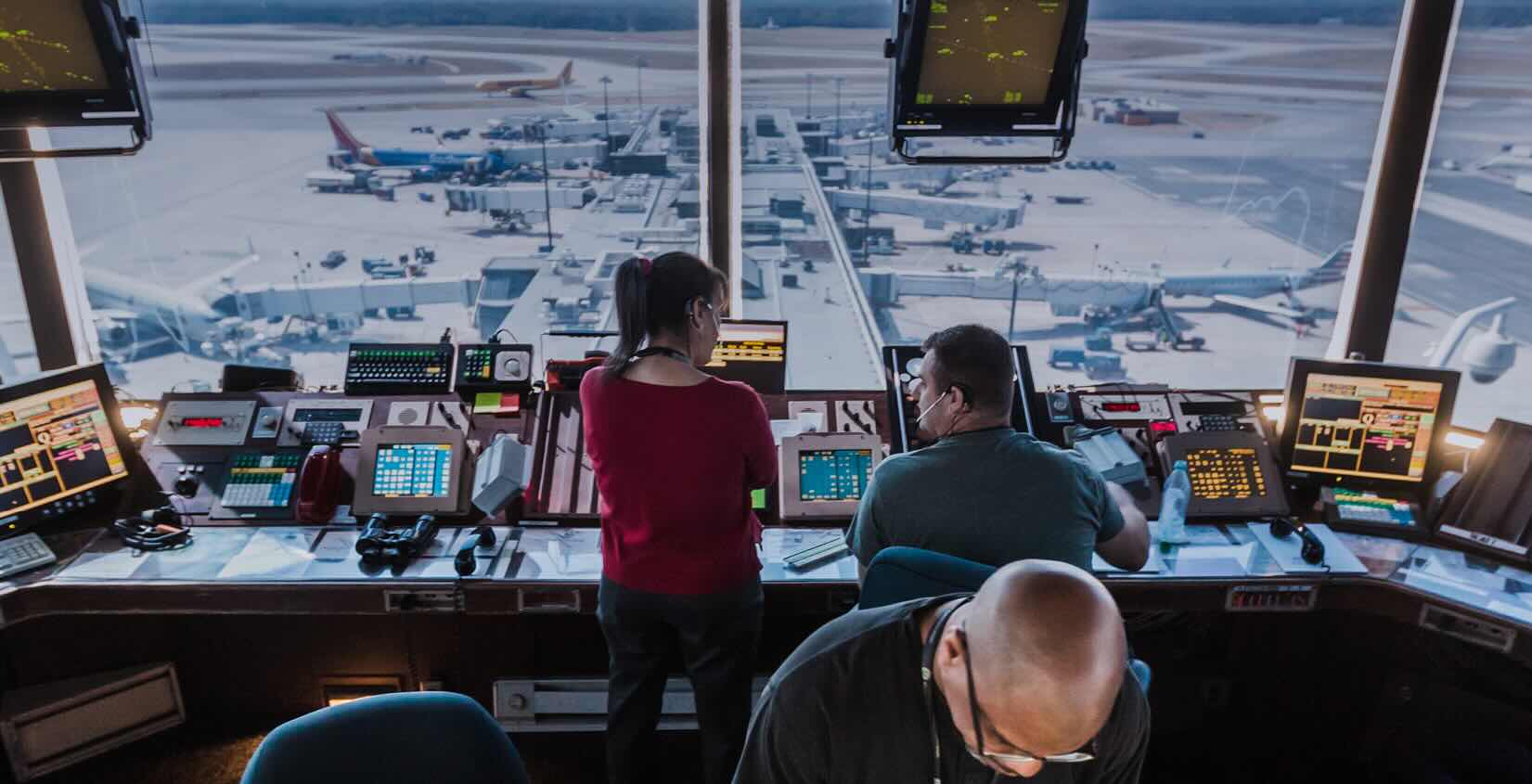
The FAA’s abrupt shutdown of airspace over El Paso last week was lifted almost as quickly as it was imposed. But the speed of the reversal has obscured a deeper and more consequential issue: how civilian aviation safety is managed when military counter-drone operations spill into shared airspace without clear coordination.
What The FAA Is Quietly Reconsidering After The El Paso Airspace Shutdown
At first glance, the incident appeared straightforward. Flights in and out of El Paso International Airport were halted under a temporary flight restriction citing “special security reasons.” Hours later, the FAA rescinded the order and said there was no ongoing threat to commercial aviation.
> Read More: FAA Halts El Paso Flights Citing “Cartel Drone” Activity, Reopens Hours Later
Public messaging pointed to cartel drone activity near the border, an explanation that was quickly amplified by federal officials. But behind the scenes, officials familiar with the episode describe a more complicated and far less tidy sequence of events. In that version, the FAA was not responding to a confirmed, sustained threat to airliners, but to a breakdown in coordination tied to military counter-drone activity operating dangerously close to civilian flight paths.
> Read More: What Really Forced The FAA To Shut Down El Paso Airspace
The FAA’s Core Problem Was Not Drones, But Deconfliction
The FAA does not need proof of hostile intent to shut airspace. It only needs to determine that it cannot assure the safety of civilian aircraft. That distinction matters.
In El Paso, the problem was not necessarily that a drone posed a direct threat to a commercial flight. The problem was that military assets, including unmanned aircraft and counter-drone systems, were operating in or near airspace routinely used by arriving and departing passenger jets. Once the FAA could no longer confidently predict where military aircraft or countermeasures would be deployed, its options narrowed quickly.
When uncertainty enters the system, the FAA’s default safety lever is blunt but effective: close the airspace until the picture clears.
Why El Paso Was Not A Routine Temporary Flight Restriction
Temporary flight restrictions are common. Presidents move. Stadiums fill. Fires burn. None of those situations look like El Paso.
The restriction imposed around El Paso covered a 10 nautical mile radius up to 18,000 feet. That is a wide vertical and lateral swath for a metropolitan airport that normally supports continuous commercial traffic. Even more telling, the original notice indicated the restriction could last up to 10 days, a duration completely inconsistent with a short-lived drone incursion.
That mismatch alone suggests the FAA was hedging against an unknown operational risk rather than responding to a discrete, resolved incident.
Counter-Drone Technology Is Moving Faster Than Aviation Coordination
According to officials briefed on the incident, the disruption was tied to counter-drone operations near Fort Bliss and Biggs Army Airfield. These operations reportedly involved directed-energy systems, including laser-based countermeasures designed to disable or neutralize drones.
Lasers introduce a unique aviation hazard. Even when not aimed at aircraft, they can pose risks to pilots, interfere with sensors, or create unpredictable exposure zones in shared airspace. Unlike traditional weapons systems, directed-energy tools require tight coordination with air traffic authorities to ensure beam paths and engagement envelopes never intersect civilian routes.
In this case, multiple sources indicate the FAA was not fully briefed on the scope or timing of these operations. That lack of coordination is what forced the agency’s hand.
Misidentification Is More Common Than The Public Realizes
One detail that emerged from internal accounts was that at least one aerial object initially treated as a drone was later assessed to be a balloon.
That fact has been treated dismissively in some corners, but it is actually central to understanding what happened. In congested airspace, small objects can be difficult to identify quickly and accurately. Drones, balloons, hobby aircraft, and even debris can appear similar across certain sensor platforms.
The risk is acting on incomplete information without fully integrating civilian aviation safeguards. That is precisely the scenario the FAA is designed to prevent.
What The FAA Is Quietly Reviewing Now
While the agency has said little publicly, the El Paso episode almost certainly triggered internal review in several areas:
- Notification requirements when military counter-drone systems are activated near civilian airports
- Real-time coordination protocols between the Department of Defense and FAA air traffic control
- Use of military lasers of any types in shared airspace corridors
- Thresholds for issuing wide-area flight restrictions versus targeted operational pauses
None of these reviews require public admission of fault. They only require acknowledgment that the existing framework is under strain.
Why This Will Likely Happen Again
El Paso is not unique. Many U.S. airports sit adjacent to military installations. Border regions face heightened drone scrutiny. Counter-drone technology is proliferating faster than regulatory oversight.
As pressure mounts to respond quickly to perceived aerial threats, the likelihood of civilian aviation disruption increases unless coordination improves. The FAA will (hopefully) always choose safety over continuity, even if that decision comes at the cost of sudden cancellations and public confusion, but that very tradeoff should not be necessary with better coordination between agencies.
While I always remain skeptical of the federal government’s ability to solve problems of this nature, I hope these sorts of conversations are happening and happening now…there should never be another incident like the collision between an Army helicopter and and American Airlines regional jet in Washington, DC.
> Read More: Reagan Midair Crash: Cockpit Hesitation Proved Fatal
> Read More: Irregularities Emerge In Aftermath Of American Airlines 5342 Crash
CONCLUSION
The El Paso airspace shutdown was not chaos as much as it was a system reacting conservatively to uncertainty.
Public explanations focused on cartel drones because that narrative is easy to communicate and deflects blame. The quieter reality is that the FAA lost confidence in its ability to safely manage mixed military and civilian operations in that moment and acted accordingly.
Flights resumed once that acute risk passed or senior leadership intervened to restore coordination. That outcome was correct. But the episode exposed vulnerabilities that have not been fully addressed.
Until counter-drone operations and civilian air traffic are better integrated, the FAA will continue to rely on its most powerful tool: shut it all down first, then ask questions later.
That may be better than doing nothing at all, but it is not an acceptable solution. We could also prevent all crime by locking everyone in their house. That doesn’t work, though. Neither does this, at least as a long-term solution.
image: FAA



Reviews
-
 Review: The Five Villas & Resort, Quangnam (Danang, Vietnam)
February 16, 2026
Review: The Five Villas & Resort, Quangnam (Danang, Vietnam)
February 16, 2026
-
 Lounge Review: VIP Lounge (PUJ – Terminal B, Gate 31) (Yes, It Has an Infinity Pool)
February 16, 2026
Lounge Review: VIP Lounge (PUJ – Terminal B, Gate 31) (Yes, It Has an Infinity Pool)
February 16, 2026
-
 Review: Air Canada Economy from Vancouver to Cancun on 737 MAX 8
February 16, 2026
Review: Air Canada Economy from Vancouver to Cancun on 737 MAX 8
February 16, 2026
-
 American Airlines 787 LAX-Tokyo Business Class Review (2018)
February 16, 2026
American Airlines 787 LAX-Tokyo Business Class Review (2018)
February 16, 2026