@savannah0191/Tiktok, Photo by John McArthur on Unsplash
A little bit of discomfort is to be expected on a commercial airplane. But air travel can be a nightmare for people who suffer from motion sickness. A flight attendant has a fix for motion sickness. And it’s already built into the iPhone.
So how does it work?
Savannah (@savannah0191), whose TikTok channel mixes opinions and stories from her life with stories from her work as a flight attendant, posted the one-minute which has since drawn more than 169,000 views.
She opens the video by promising anyone who gets carsick, or feels ill looking at a phone on a plane, that she has “a little hack.”
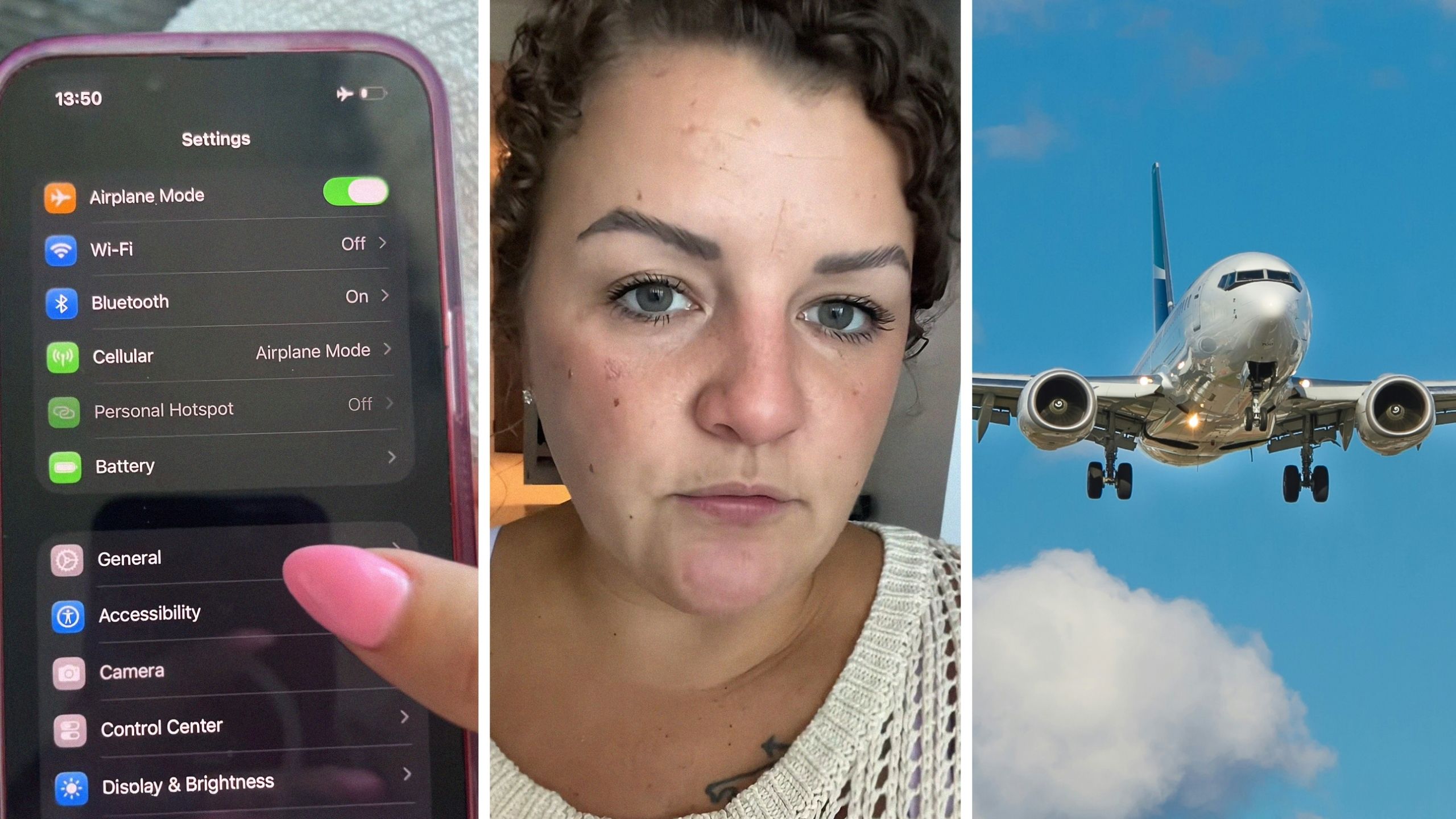
“It’s on the iPhone. I’m not sure exactly how you can turn it on for an Android,” she says, then films her phone as she taps through Settings, Accessibility and Motion to Vehicle Motion Cues.
She reads the description: “The dots will appear near the edges of your iPhone screen. They follow the movement of the vehicle and may help reduce motion sickness.” If you toggle the “Automatically in Vehicle” setting, she says, your iPhone will keep them “always off unless you’re in a vehicle and then it’ll automatically turn on.” The menu further lets users change the dots’ pattern, color, size and number.
“So anytime you move, these dots also move, and they help your eyes and adjust for your motion sickness,” she says.
How Does The Science Work?
shakingmyhead_ wrote asked the question on many minds: “I’m trying to understand the mechanics around how moving dots is gonna help you with motion sickness.” Savannah replied, “I Don’t Quite Understand The Science, But It Works.”
When Apple announced the feature in 2024, it said research shows “motion sickness is commonly caused by a sensory conflict between what a person sees and what they feel,” and that the dots “represent changes in vehicle motion to help reduce sensory conflict.”
The Center for Disease Control and Prevention’s (CDC) Yellow Book, the agency’s travel medicine reference, calls sensory conflict “the most widely accepted explanation for motion sickness.” Commenter suspiciousgiraffe explained that the brain “can’t understand why it feels like it’s moving in its balance senses but it looks visually like you’re staying still, and it freaks out.”
The approach deployed on Apple’s devices is not new. In 2019, University of Salzburg researchers built a phone app that floated sensor-driven bubbles along the margins of the screen, and a small study of 10 people reading in a moving car “showed mitigating effects on motion sickness symptoms.”
Built With The Backseat In Mind
Savannah’s caption says it works for people who get motion sickness on cars and planes, but Apple’s support page describes the feature for passengers “in a car or other on-road vehicle” and doesn’t mention aircraft.
Its automatic setting kicks in “when iPhone detects that you’re riding in a car or other on-road vehicle,” so flyers who want the dots in the air can pick “On,” which keeps them on screen until they’re switched off, or toggle them from the control center.
Some viewers say they already use it in the air. “It really works! Planes and cars!” wrote dogmom101814. Another self-described flight attendant, taytaytaytaytaytay888, wrote, “I’m an FA and use these, even on my work phone. Everyone always asks about them and then they ask why I’m an FA if I get motion sickness.”
By Savannah’s account, motion sickness has already cost her airline’s training class one recruit. When sarawills38 wrote that airsick passengers “would be my biggest reason not to become an attendant,” she replied, “There was a girl in my training class who had never flown before, and she got sick the first week and quit.”
Commenters pointed out that Android owners, whom Savannah wasn’t sure how to help, now have their own version called Motion Assist. Google’s help page says its “small, subtle visual bubbles” match “how the vehicle turns, speeds up, or brakes,” but the feature needs Android 17 or later, and Google warns that phones “may not always be able to detect when you’re in a moving vehicle.”
Other “Cures” For Motion Sickness On Flights
Commenters in the thread traded other remedies, which don’t all have solid scientific backing.
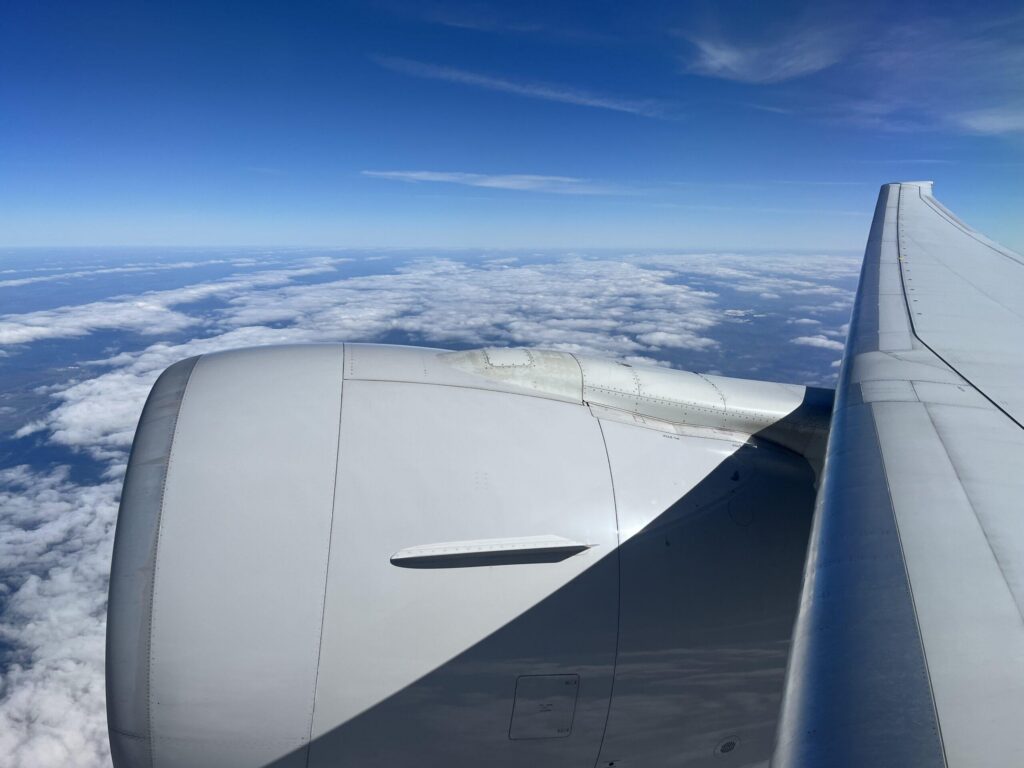
“I need to be over the wings,” wrote joyful402, which matches the Yellow Book’s advice for flyers: “in aircraft, sit near the wings.”
Another commenter, maryannmermelstei, wears acupressure wristbands, which the CDC says have done no better than placebo in lab trials, though “if an individual finds they work, they may still be useful.”
A commenter posting as harrysdiscohouse wrote, “Dramamine and a glass of wine work for me.” The CDC says alcohol increases motion sickness and should be avoided.
Not everyone was sold on the tech fix for motion sickness. “I used to get motion sickness, but I turned that on and now I do,” wrote cmd42966. Savannah’s advice: “Turn it off.”
Others said it changed how they travel. “I can’t look at my phone for more than 10 minutes in the car without getting sick,” wrote krazyart17, and Savannah replied, “I was the same way until I used this!” A commenter posting as mindilabella80 had a trip coming up: “Flying soon, and this is going to save me!”
BoardingArea reached out to Savannah via TikTok direct message and to Apple by email for comment. We’ll be sure to update this if they respond.
JT Wilson is a journalist with bylines in outlets including The Guardian, the Daily Dot, The Atlantic, Bellingcat, Religion Dispatches and more.
Also on BoardingArea
Frequent Flyer Bonuses
Turkish Airlines Miles&Smiles: Earn up to 6,000 bonus miles on Hilton stays worldwide
Turkish Airlines and Hilton are back with a bonus Miles&Smiles promotion! This time the bonus is offered on up to three stays instead of just one stay like the last offer. What is great about this bonus is that it can be earned in addition to the Hilton points you...
Miles To Memories
More Bad Hyatt News, Easy Bank Bonuses Are Back & Mark vs. a Skunk
More terrible Hyatt news incoming, why bank bonuses may be getting better, getting a jump start on new quarterly categories & offers plus Mark faces off with a skunk.
View from the Wing
Elon Musk Is Helping American And United Poach Delta Flyers—With Offers To Match Elite Status
Elon Musk is now promoting American and United offers to match frequent flyer status, giving unhappy Delta customers a way to switch without starting over at the bottom. After declaring that Delta CEO Ed Bastian would lose his job over the Starlink dispute, Musk is helping advertise the competition.
View from the Wing
Report: American Airlines Expands Starlink Plans To Full Boeing Fleet—Could It Become More Premium Than Delta?
American Airlines’ Starlink plans now appear to include Boeing 737s, 777s and 787s, expanding beyond the Airbus rollout announced in May. Getting the best wifi in the sky onto its long haul aircraft would fix one of American’s worst product weaknesses—and help it challenge Delta’s premium reputation while Delta waits...
Pointshogger
Thursday News and Notes
Air Canada co-branded credit cards, starting 2027 with have some big changes (American Express, CIBC and TD). Fellow bloggers have some well-written articles already: Rewards Canada and Points Miles and Bling. Some of the bigger highlights to me are:
Your Mileage May Vary
How We Used Bilt’s $25 Dining Credit
We recently used $25 in Bilt Cash toward a restaurant bill, and the process was easier than I expected. We’d booked our reservation through OpenTable rather than Bilt, but when…
Paddle Your Own Kanoo
El Al to Operate Special Repatriation Flights From Dubai After Flydubai Cancellations Cut 1,840 Seats Per Day On Route
El Al Israel Airlines has been authorized by the Israeli government to operate special repatriation flights from Dubai to Tel Aviv after Flydubai was forced to temporarily suspend all operations on the route in the wake of a suspected terror attack perpetrated by one of its own pilots. Dubai has...
One Mile at a Time
Huge IHG & Chase Credit Card Changes: Higher Fees, New Perks, & More
IHG and Chase have overhauled their credit card lineup, raising annual fees while adding new credits, bigger free night awards, and updated elite status perks.
One Mile at a Time
New $350 IHG One Rewards Premier Select Card: 200K Bonus Points, Strong Perks
Chase and IHG launch a $350 Premier Select Card with airline credits, dining perks, automatic Platinum status, and a strong welcome bonus.
Live and Let’s Fly
Report: American Airlines To Bring Starlink To Its Entire Fleet, Including Boeing 737, 777, And 787
American Airlines may be preparing to significantly expand its Starlink rollout beyond the Airbus narrowbody fleet, potentially bringing the high-speed internet service to its Boeing 737, 777, and 787 aircraft as well. American Airlines May Expand Starlink To Boeing 737, 777, And 787 Fleets When American Airlines announced its Starlink...
Miles To Memories
United Cards Launch Limited-Time Welcome Offers of Up to 100K Miles
Chase and United have rolled out elevated welcome offers across four United consumer cards, with bonuses ranging from 50,000 to 100,000 MileagePlus miles.
View from the Wing
Air France KLM’s $89 Card Offers 70,000 Miles—And A Strategy For Cheaper Business Class And First Class Access
The bonus includes 100 status credits, and annual spending can add 160 more at the card anniversary. Combined with a Gold status match, that puts Platinum—and its better award availability—within reach.
The Gate with Brian Cohen
Save 10% on Airfares With Ethiopian Airlines
In celebration of reclaiming its leading position as the Best Airline in Africa for the ninth consecutive year with SKYTRAX, you can save 10% on airfares with Ethiopian Airlines on almost all fares in both the economy class cabin and in the business class cabin for travel from today, Thursday,...
View from the Wing
Woman’s Boyfriend Took A First Class Upgrade And Left Her In Coach—Says A “Real Man” Would Have Swapped
A woman says her boyfriend's first class upgrade was “the beginning of the end” of their relationship. He took the better seat, left her in coach, and waved back while enjoying a beer. She says a “real man” would've given her the upgrade. I think he should have offered. But...
Your Mileage May Vary
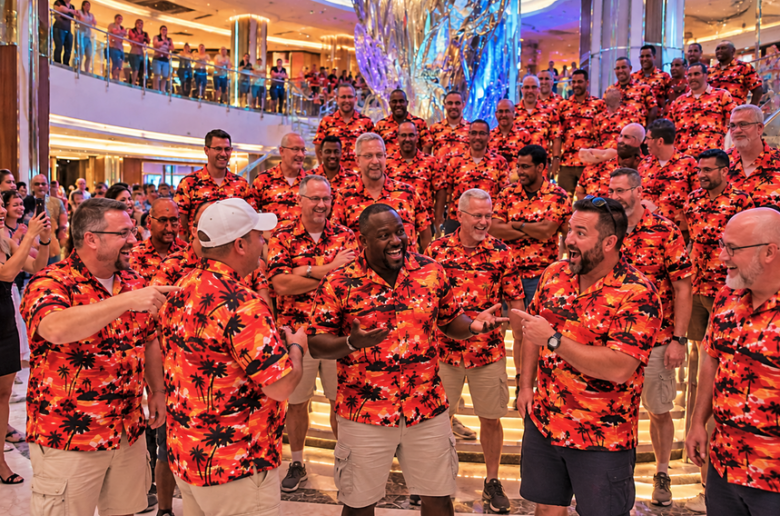
100+ Women Got Their Men To Wear The Same Shirt On A Cruise. The Guys Had No Idea
Sometimes travel includes just having a little bit of fun. It could be that time when Queen Elizabeth trolled some American tourists. Or the prank that’s been played on incoming…
Miles For Family
October 2026 Transfer Bonuses
It’s a new month. Let the new transfer bonuses commence! New: Capital One 20% Transfer Bonus to British Airways Avios Through October 31, 2026, get 20% transfer bonus from Capital One miles to British Airways Avios. Last month, Chase offered a 30% transfer bonus to Avios, but 20% is the...
Miles To Memories
Chase Launches New IHG One Rewards Premier Select Credit Card, Plus Updates Existing IHG Card Portfolio
Chase and IHG have announced a broad refresh of the IHG One Rewards credit card portfolio, with changes coming to all three existing cards alongside the launch of the new IHG One Rewards Premier Select Credit Card.
Points Miles and Bling
Canada to China Direct Flights: Routes, Airlines, and Booking with Points
Vancouver Airport Authority recently highlighted (via LinkedIn) a significant increase in China capacity beginning in Fall 2026. Air China is…
Frequent Flyer Bonuses
Air Canada Aeroplan: Receive a 15% bonus on points transfers from Marriott Bonvoy (October 1 Bonus Offer Highlight)
Today's Bonus Offer Highlight is the return of the once per year 15% transfer bonus from Marriott Bonvoy to Air Canada Aeroplan. Check out all of the new bonuses added today:
Live and Let’s Fly
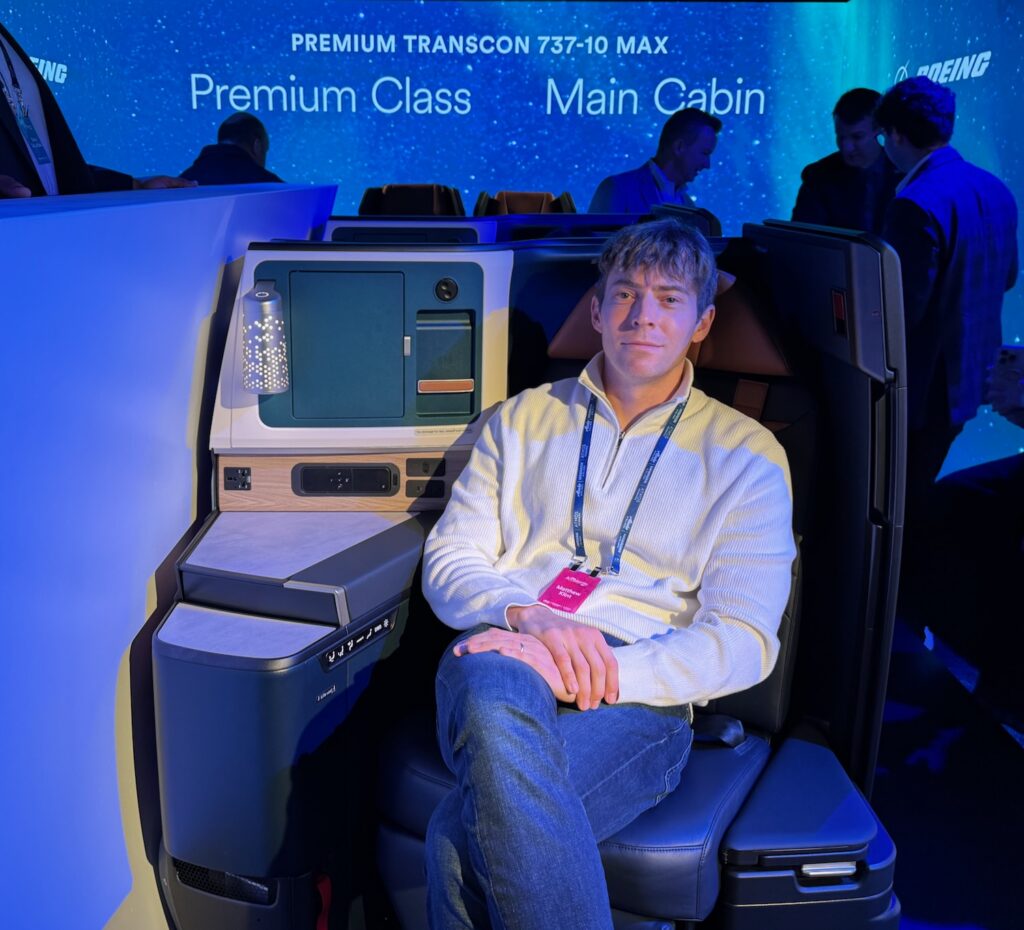
I Tried Alaska Airlines’ New Business Class And Premium Economy Seats. Here’s A First Look
Alaska Airlines invited members of the media, including Live And Let’s Fly, to Seattle on Tuesday for a look at its next chapter. Between the executive Q&A, seat mock-ups, food samples, and training center tour, there was plenty to take in. Inside Media Day At Alaska Airlines’ Global Training Center...
Monkey Miles
Current Transfer Bonuses for October – 12 active bonuses ( 6+ added today )
Miles To Memories
Rove Launches Three October Transfer Bonuses: Qatar, Japan Airlines and Flying Blue
Rove has launched three airline transfer bonuses for October, with a 50% bonus to Japan Airlines Mileage Bank, 40% to Flying Blue and up to 35% to Qatar Airways Privilege Club.
TravelUpdate
Review: A bad seat on Philippine Airlines A330 business class Manila to Sydney
Is there such a thing as a bad seat in business class? Turns out the answer is yes,…
View from the Wing
Hyatt’s New Hotel Offer Can Be Much More Lucrative—Up To 25,000 Bonus Points Per Stay
Hyatt is replacing its automatic 500-point nightly bonus with double points on a special rate. A $300 night can now earn triple the bonus, and up to three rooms count—but award stays lose out.