@madelinebattle/Tiktok, Photo by Orkhan Mammadov on Unsplash
A flight attendant says a 19-year-old passenger had such a severe meltdown on a recent flight that the crew called for a doctor and moved him to his own row. She says the cause wasn’t turbulence, claustrophobia, or a medical emergency. Instead, it was something far more mundane.
He’d dropped his phone in the water on vacation and hadn’t had it for a day.
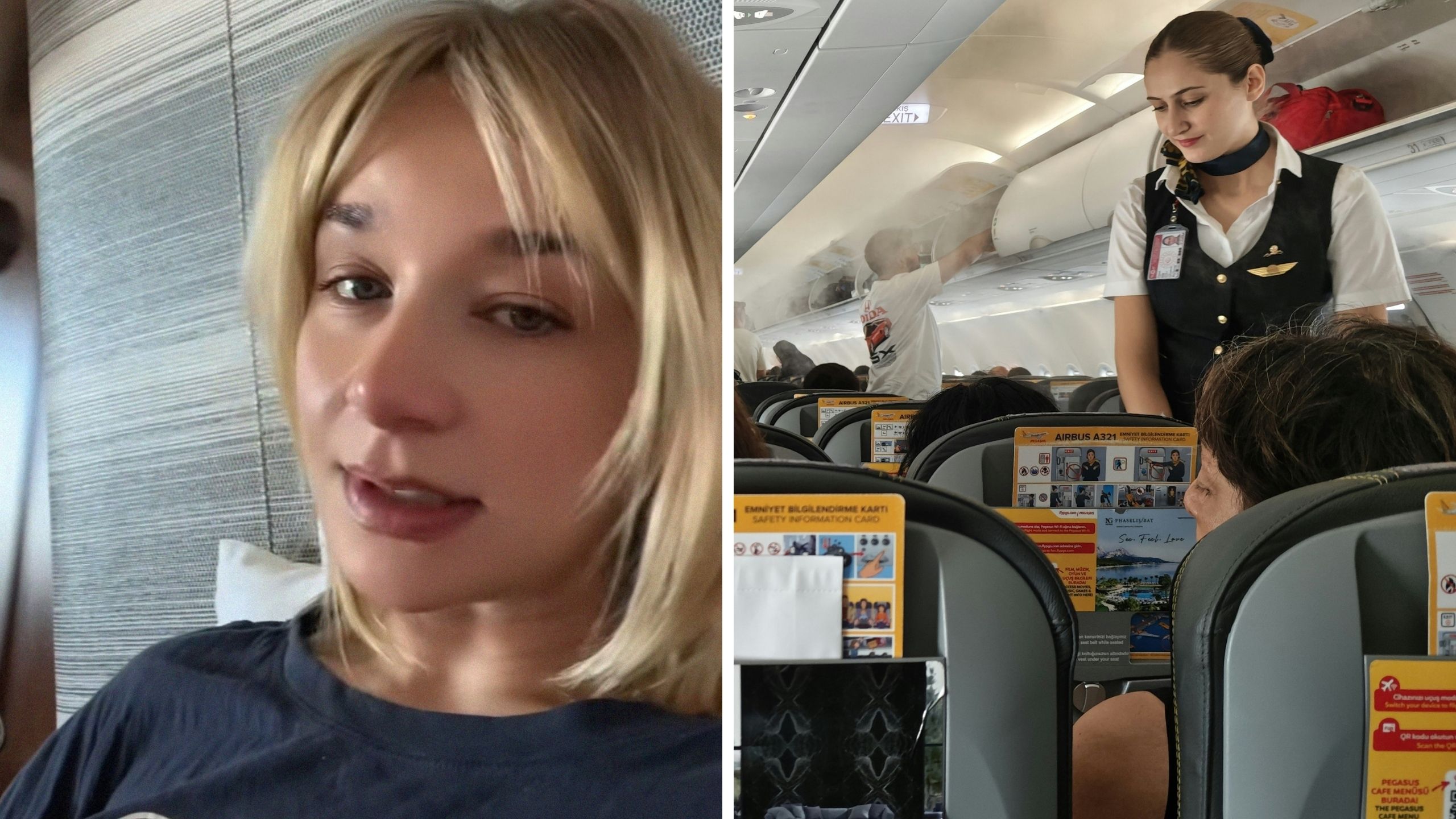
Madeleine Battle (@madeleinebattle), a Detroit-based flight attendant who posts about her job and life on TikTok, recently shared the story in a three-minute, 41-second video.
It has drawn more than 2,400 views, with commenters calling the incident everything from “terrifying” to a sign that “we are doomed.”
How Did The 19-Year-Old React To Not Having His Phone?
Battle says the incident began just after the safety demonstration, when she heard someone “hysterically sobbing.” She found a 19-year-old man in an aisle seat who told her he was extremely claustrophobic. She got him water and headphones so he could watch a movie and distract himself.
“He thanks me, [I] walk away,” Battle says. “He, like, turns around. He just, like, looks at me, and he just starts screaming, crying, kicking his legs around.”
She tracked down his family, who were seated elsewhere on the plane, and asked them to come talk to him. The crew moved him to an empty row in the back so he could have space, but the situation escalated to the point where the flight attendants in the back called for a doctor.
“The doctor is doing his thing. He was great, by the way,” Battle says.
What Caused The Young Man’s Reaction?
Then the passenger’s father, who had been sitting in first class, appeared in the back of the plane.
“He pulls out his phone and hands it to his son and is like, just take this. Just take it. Put it on Snapchat. Talk to your friends. Whatever you need to do to feel better, just do it,” Battle says.
Battle pulled the father aside and asked what was going on. He told her his son has obsessive-compulsive disorder (OCD), depression, and anxiety, and that he’d flown four or five times recently without incident. The difference this time: he had dropped his phone in the water on vacation and hadn’t had one for a day.
“He’s having a breakdown because these kids are so addicted to their phones,” Battle says the father told her. “He hasn’t had a phone for a day, and he’s losing his mind. Like, he is having withdrawals right now.”
Snapchat Stops A Meltdown
When the son got his father’s phone and opened Snapchat, Battle says, the transformation was immediate.
“Completely better. Completely better. Completely new person,” she says. “Because he had his fix.”
But then the phone locked, and the son didn’t know his father’s passcode. “He started freaking out again,” Battle says. She had to go retrieve the passcode from the father so the son could calm down a second time.
Battle compares the dynamic to substance dependency. “As if you know, we were giving an alcoholic their little shot to get through the night,” she says. “We were giving a drug addict their little, you know, fix.”
She didn’t respond to a direct message sent via TikTok.
Is Cell Phone Addiction Real?
Battle’s story may sound extreme, but it aligns with a growing body of research on phone dependency among young adults.
A 2025 CDC study found that teens who spend more than five hours a day on screens are twice as likely to show symptoms of depression. Research published in the American Journal of Health Research found that digital addiction “mirrors behavioral addictions”, including “preoccupation, loss of control, escalation, withdrawal-like irritability, and persistence despite harm.”
Meanwhile, unruly passenger incidents remain a persistent problem for airlines. The Federal Aviation Authority (FAA) reported 2,096 unruly passenger cases in 2024, a slight increase from 2023.
While alcohol is frequently cited as a trigger, mental health crises are increasingly recognised as a factor. Congress introduced the Mental Health in Aviation Act of 2025 to address mental health-related recommendations from the FAA Reauthorisation Act of 2024.
Phone Addiction: A Sign Of The Times
Commenters were unsettled. Bailee wrote, “That is actually so sad. What is happening to our world? I look forward to not using my phone on flights.”
Eno wrote, “I have not heard a single story of kids/teens with phones/tablets that makes me want to let my kids have screen time. This is terrifying.”
Shayla offered a different perspective, noting the role of the passenger’s existing conditions: “I’m 27, OCD and autism and legit will freak out without access to my phone. I don’t have to be on it but without the access if something happens, because that OCD spiral? Nope.”
Abbynormaleigh added, “As a parent of a 13-year-old, yes it is that addictive for these kids. It’s really sad parents don’t know the damage being done.”
J3ss13G shared a contrasting experience. “I lost my phone the first night in Bangkok on a 3 week trip … at first I was really upset but I just took my friends’ phones when I wanted to take a pic and I got used to it quick … by the time I got back to the states I felt so free I didn’t even want to get another one,” they wrote.
Battle summed up her own reaction in a reply to one commenter: “I feel like I saw a glimpse into our dystopian future.”
Correction: The headline of this article originally inaccurately said the passenger was restrained.
JT Wilson is a journalist with bylines in outlets including The Guardian, the Daily Dot, The Atlantic, Bellingcat, Religion Dispatches and more.
Also on BoardingArea
Frequent Miler
The clock ticks for semi-annual credits, Citi cancels more than Custom Cash, cards for domestic travel and more (Week in Review)
For the past few weeks, expiring credit card credits (particularly hotel credits) have been on my mind almost non-stop. With about three weeks left to go in the first half of the year, I still have yet to use the following: Use by June 30, 2026: Amex Fine Hotels +...
One Mile at a Time
Amex No Annual Fee Business Card That Earns Points: The Overlooked Benefit
The Blue Business Plus Credit Card from American Express (learn more) is one of Amex’s most lucrative and overlooked business cards. The card has no annual fee (Rates & Fees), and earns 2x Membership Rewards points on the first $50,000 spent every calendar year (and then 1x points), making it...
Eye of the Flyer
Giant Rat Clings to Jet Flap During Landing, Real or CGI You Decide, Pilot Arrested for Dive-Bombing a Crowded Beach Three Times, and More Travel News!
Here are this week’s travel news headlines from around the web and interweb I found the most interesting. Take a look: There Is a Giant Rat Riding on the Deployed Flap of a Jet Coming in for Landing. Yes, Really. I honestly don’t know what to think about this one....
View from the Wing
British Airways Flight Attendant Suspended After Sex For Wine At Layover Hotel
A British Airways flight attendant has been suspended after reportedly getting drunk at a hotel in Belfast during a layover and offering a sexual proposition to an employee in exchange for wine after the bar closed. And given cabin crew layover culture at the airline, this is the most British...
View from the Wing
When Jewish Guests Checked Into A London Hotel, The In-Room TVs Greeted Them With ‘Free Palestine’
A 24-year old Orthodox Jewish traveler from New York, in London for a friend’s wedding, filmed the TV in his room at the Travelodge London Manor House showing a welcome screen that included “Free Palestine.” A second visibly Jewish guest, staying in another room, reported the same message and that...
One Mile at a Time
Big Marriott Bonvoy Business Amex Card Welcome Offer: 150K Points, $125 Credit
The Marriott Bonvoy Business American Express Card is the primary business card in Marriotts card portfolio, and its quite lucrative, especially if youre looking to earn elite status. Were currently seeing an improved limited time welcome offer on the card, making it an ideal time to apply. In this post,...
Economondo
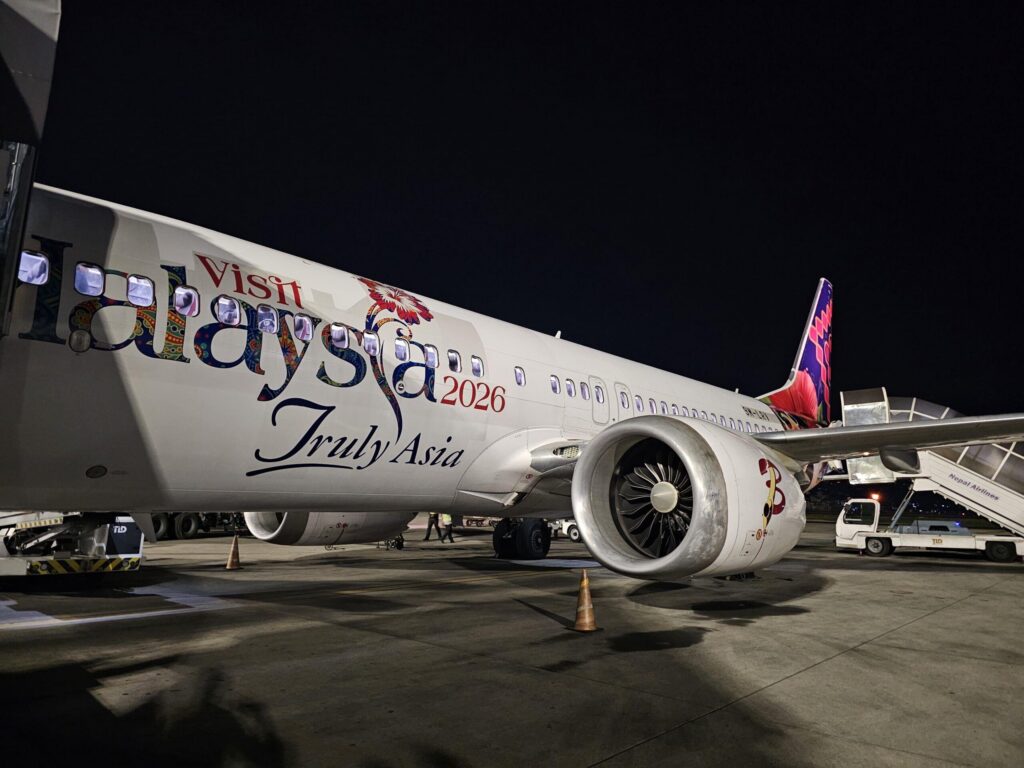
Flying Malaysia’s ‘Other’ LCC: Kathmandu to Kuala Lumpur on a Batik Air Malaysia 737 MAX
Join me as I fly with Batik Air Malaysia on a night time hop from Nepal to Malaysia
Paddle Your Own Kanoo
The TSA is Testing New Biometric System to Make Program That Allows Pilots and Flight Attendants to Skip Airport Security More Secure
The Transportation Security Administration (TSA) has started operational field testing of a new biometric system that is designed to make a program that allows pilots, flight attendants, and other critical airline workers to skip past airport security screening more secure. By the end of 2026, the current system, which is...
Paddle Your Own Kanoo
British Airways Pauses Ultra-Fast Starlink Wi-Fi Rollout Until October With Just Five Planes Equipped
The rollout of ultra-fast Starlink Wi-Fi across British Airways’ fleet has been put on hold until the end of October at the earliest because the airline does not have any leeway to keep aircraft on the ground long enough to install the Wi-Fi hardware while still operating its ambitious schedule....
Frequent Miler
Alila Marea Beach Resort Encinitas: Bottom Line Review
The San Diego area is my favorite part of the West Coast, and my favorite part of the San Diego area is the northern part of the county. Stretches of long, empty, cliff-backed beaches alternate between laid-back towns like Solana Beach, Encinitas, and Carlsbad, and it’s all within easy reach...
View from the Wing
United Stowaway Got Past TSA With A Fake Boarding Pass, Got On The Plane And Asked To Sit In Flight Attendant’s Seat
A Houston man allegedly got through TSA with a fake boarding pass, slipped past a distracted United gate agent, and boarded a full flight to Los Angeles without a ticket. He might have made it farther if every seat hadn’t already been taken.
Points With a Crew
Marriott Bonvoy Business Review – 150K Points AND $125
The Marriott Bonvoy Business card has a new welcome offer that is potentially worth hundreds of dollars (or more). This one credit card offer could make your next vacation ...
The Gate with Brian Cohen
Travel Ideas For Summer
Now that Memorial Day has passed, if you were wondering about some places to visit and things to do for the summer within the United States which are just slightly out of the ordinary, this article contains some different ideas about where you might want to consider traveling.
The first event...
View from the Wing
Marriott’s $95 Card Now Offers 125,000 Points, A Free Night And $100 Back On Airfare
The Marriott Bonvoy Boundless Card has a new limited-time offer that is unusually strong for a $95 hotel card: up to 125,000 points, a free night worth up to 50,000 points, and up to $100 back on airline purchases. It is a card worth getting for the bonus—and, because of...
Frequent Miler
Life after Citi | Frequent Miler on the Air Ep361 | 6-5-26
In today’s episode, Greg shares the story of how Citi shut down his accounts and what’s next for him. (What will he do without his beloved Prestige card?) Read more about Greg’s situation with Cit here. Life after Citi Watch the full episode below, or listen on your favorite podcast...
Paddle Your Own Kanoo
Southwest Airlines Boeing 737 Diverts Back to Austin With Mysterious Metal Debris in Engine
A Southwest Airlines Boeing 737 diverted back to Austin–Bergstrom International Airport on Thursday after the pilots reported problems with the right-hand engine of the 21-year-old aircraft. Southwest flight WN-375 departed Austin at around 11:53 am on June 4 for a regularly scheduled flight to Phoenix, but after climbing to just...
Your Mileage May Vary
Uber One Just Became More Useful For International Travel
Uber One has always been one of those benefits that’s easy to forget about — especially if you have it because a credit card or promotion is covering the cost.…
Frequent Miler
Get up to 10% back at Kroger brands with new Chase Offer
One of my favorite Chase Offers is back, offering either 5% or 10% back at Kroger’s various brands. My Chase cards have the 10% version of the offer, while my wife’s have the 5% version. In both cases, the cashback is limited to $90 in spend, but we each have...
View from the Wing
Southwest Once Put A Bikini Model On A Plane — Now They’re Telling Passengers To Cover Up
Southwest Airlines passenger Carolina Rodriguez says an airline employee came up to her in the bathroom before she boarded her Oakland - San Diego flight and told her to cover herself because children would be on the plane. So she asks the internet, was her attire "too much?" ...
Frequent Miler
American Express Business Green Card Review (2026)
We don’t write much about the Business Green card, and for good reason. It’s not terribly exciting. For a couple of years, Greg has predicted that Amex would finally refresh this forgotten stepchild of the Membership Rewards-earning portfolio. I hope he’s eventually proven right-it desperately needs it. See our Guide...
2PAXfly
EXPLAINER: What’s the difference between narrow-body versus widebody aircraft?
It used to be largely true that wide-body aircraft were for long-haul flights and narrow-body aircraft were for short-haul flights. Bue recently, and especially since the advent of the Airbus A321XLR, that distinction no longer holds. What largely holds is the level of comfort and service provided on the different-sized...
Points With a Crew
I Majorly Saved The Day At The Airport
An elderly gentleman was dumped at the wrong gate at the airport and nearly missed his international flight. Thankfully I was there to help by ...
Points With a Crew
What is an open jaw flight?
What is an open jaw flight? Travel expert Dan Miller takes the mystery out of what is an open jaw flight, why you should know, and how to maximize them.
Your Mileage May Vary
These American Phrases Drive People From Other Countries Crazy
Americans have a lot of unique expressions. Some become surprisingly popular overseas. Others leave people scratching their heads, wondering why we say them at all. And then there are the…
Travel Update is a collective blog of expert frequent flyers who write about the topics, experiences, advice and adventures of travel from around the US, Europe and the world. #flymore
Paddle Your Own Kanoo is a leading aviation news website. It has an active worldwide readership and is focused on rigorously researched articles that are fair and accurate.
Matthew is an avid traveler, flying more than 200,000 miles per year. Live and Let's Fly shares the latest news in the airline industry, commentary on frequent flyer programs and promotions, and detailed reports of his worldwide travel.
Eye of the Flyer shows you how to enjoy your travel experience primarily with Delta (and a few other carriers, as well). Tips about elite status, credit cards, and earning and burning SkyMiles, and upgrades!