‘Had A Valid Ticket, Checked In, Everything’: Woman Books Flight With Discount European Airline. Then She Tries To Board
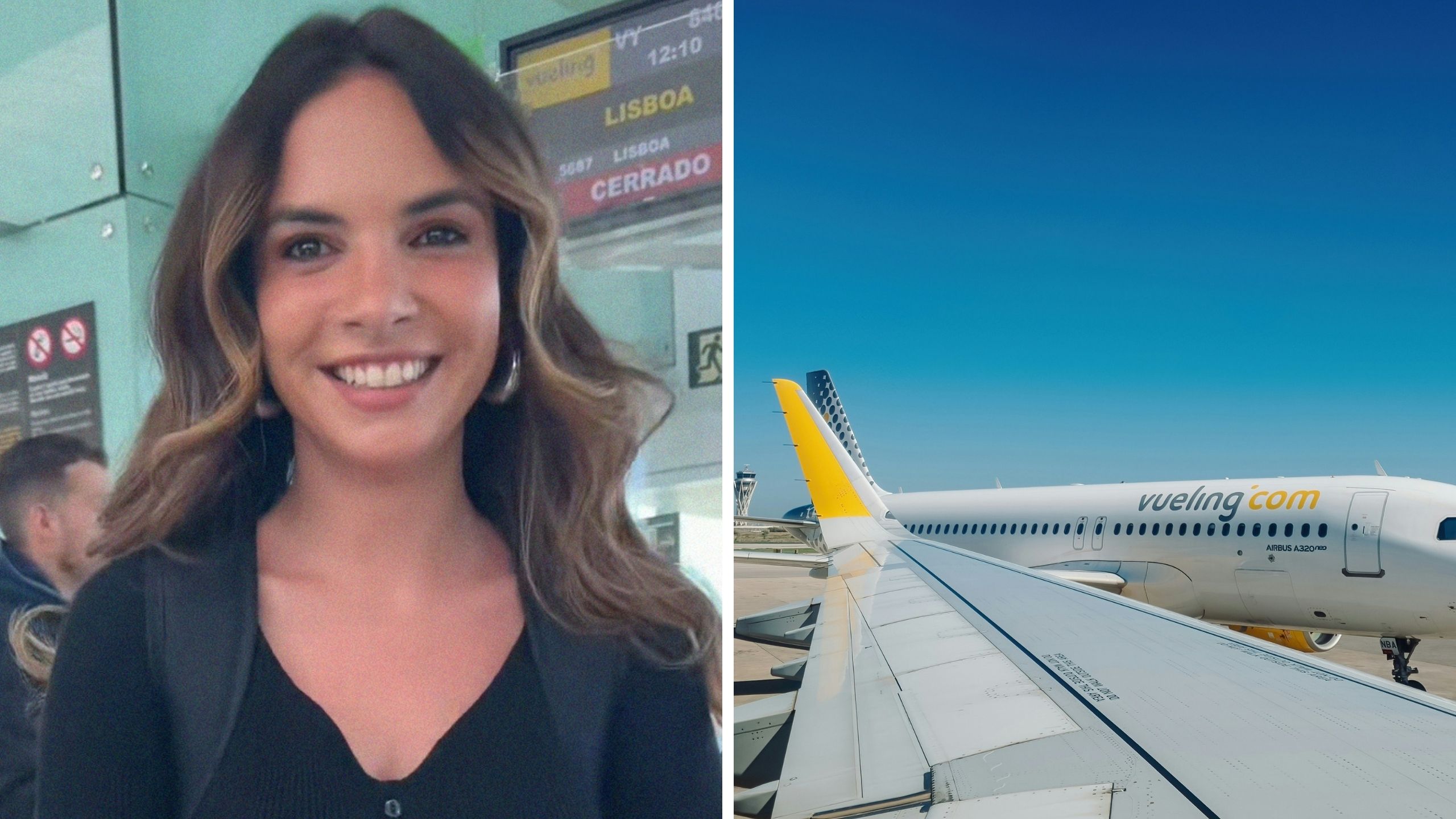
A Portuguese beauty and lifestyle creator’s TikTok from a European airport check-in desk has drawn more than 204,000 views, inspiring a familiar question from travellers on both sides of the Atlantic: how is it legal for airlines to sell more seats than they have?
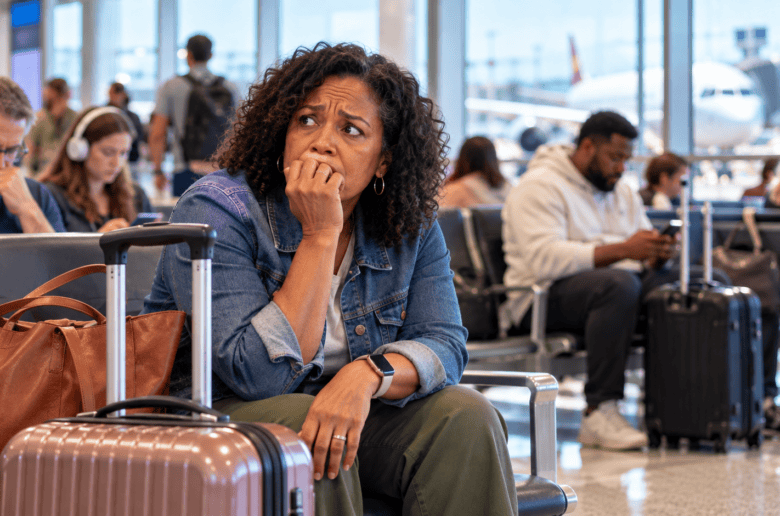
The creator, who had checked in for her Vueling flight with what she describes as a valid ticket in hand, says she was told there was simply no seat left for her.
Mafalda Sampaio (@mafalda.sampaio), an influencer whose usual content runs to skincare, makeup and family life, posted the clip on April 10. “@Vueling overbooked my flight… and I got left behind,” she wrote in the caption. “Had a valid ticket, checked in, everything…. and still no seat. This shouldn’t be normal.”
Sampaio didn’t respond to an email sent to the address listed on her website.
Vueling’s Overbooking Practice
Vueling is a Barcelona-based low-cost carrier owned by the IAG group and the largest airline at Barcelona’s main El Prat Airport (BCN).
The airline makes no secret of the fact that it sells more seats than its aircraft contain. The airline’s own help page on denied boarding describes overbooking as standard industry practice based on statistical modelling of no-shows.
But the modelling goes wrong often enough to generate complaints in significant volume. Claim-assistance firm AirAdvisor reports more than 66,000 passenger complaints against Vueling in its database, with half resulting in payouts to the aggrieved passengers. Complaints reviewed by travel-rights firms describe Vueling overbooking flights by 8 to 12 passengers at a time on routes as short as the one hour, 45 minute flight from Barcelona to Seville.
Sampaio’s comment section filled up with Portuguese-speaking travellers reporting similar experiences on Vueling and other European carriers, several saying it had happened to them more than once. One English-language comment, from creator DAISY, claimed she had been denied boarding on a Vueling flight three days earlier with a one-year-old in tow and spent nine hours at the airport waiting for a replacement.
Another commenter, Apple User438829, had a different take, writing in Portuguese, the comment roughly translated read, “I love Vueling. I’ve been overbooked three times and earned €1,000,” or nearly $1,200 at the current exchange rate.
What Passengers Are Actually Owed
Sampaio and her fellow passengers are protected by EU Regulation 261/2004, one of the most consumer-friendly air passenger rights regimes in the world. Under EU261, a passenger involuntarily denied boarding on a commercial flight departing from an EU airport—or arriving in the EU on an EU carrier—is entitled to cash compensation on a sliding scale:
- €250 (approximately $300) for flights of 1,500 km or less
- €400 (approx. $470) for intra-EU flights over 1,500 km, or other flights between 1,500 and 3,500 km
- €600 (approx. $700) for flights over 3,500 km
The airline is also required to provide meals, refreshments and, if necessary, overnight accommodation and ground transport, plus either a full refund or rebooking on the next available flight. Airlines must first seek volunteers before bumping anyone involuntarily.
The European Commission adopted a revised proposal in June 2025 aimed at modernising EU261, though the current compensation scheme remains in effect while the revisions move through the European Parliament.
How The US Handles Overbooked Flights
The comparison with American rules is instructive. US Department of Transportation (DOT) Part 250 regulations also require airlines to ask for volunteers before involuntarily bumping anyone. When that fails, compensation is tied to how long the replacement flight will delay the passenger:
- No compensation if rebooked within one hour of the original arrival
- 200% of the one-way fare, up to $1,075, for a delay of one to two hours on domestic flights (one to four hours internationally)
- 400% of the one-way fare, up to $2,150, for longer delays
Importantly, passengers can insist on a check rather than accepting a travel voucher—a right many travellers are unaware they have.
The practical difference is that US caps are denominated in dollars and tied to fare paid, while EU compensation is a flat fee based on flight distance regardless of ticket price. A traveller bumped from a €40 Vueling fare on a Barcelona-Paris hop can collect €250 — more than six times the ticket cost. A US passenger bumped off a $40 Spirit Airlines flight to a city a few hours’ drive away might receive no compensation at all.
Involuntary Bumping Has Plunged In The US
US airlines have also dramatically reduced involuntary bumping since the 2017 United Airlines incident in which a passenger was dragged off a flight. DOT figures show involuntary denied-boarding rates at the largest US carriers are now roughly one tenth of what they were a decade ago.
The DOT’s latest Air Travel Consumer Report put the 2024 involuntary bumping rate at 0.28 per 10,000 passengers, roughly a third of the 0.69 per 10,000 rate in the third quarter of 2016, the period just before the United Airlines incident. The Government Accountability Office documented airlines responding with dramatically higher voluntary compensation offers, with most now offering escalating incentives until enough passengers accept.
But while the EU rules guarantee generous compensation, passengers report that claiming it often requires months of paperwork, and in many cases the help of a claims firm taking a 25% to 50% cut depending on whether the case goes to court.
For Sampaio, the next step is the paperwork. She didn’t specify in her video or caption whether she intends to pursue a claim.
@mafalda.sampaio @Vueling overbooked my flight… and I got left behind. Had a valid ticket, checked in, everything…. and still no seat. This shouldn’t be normal. Has this ever happened to you? #vueling #overbooking #travelfail #airportchaos #flyingproblems ♬ som original – mafalda.sampaio