Woman Thinks She Feels Seaweed Wrapping Around Her Leg On Family Beach Trip. Then She Ends Up With Multiple Disabilities
Most people expect seaweed, shells, or the occasional fish when they go swimming in the ocean.
According to one woman, however, you shouldn’t assume that whatever’s touching your leg as you’re swimming is as harmless as seaweed.
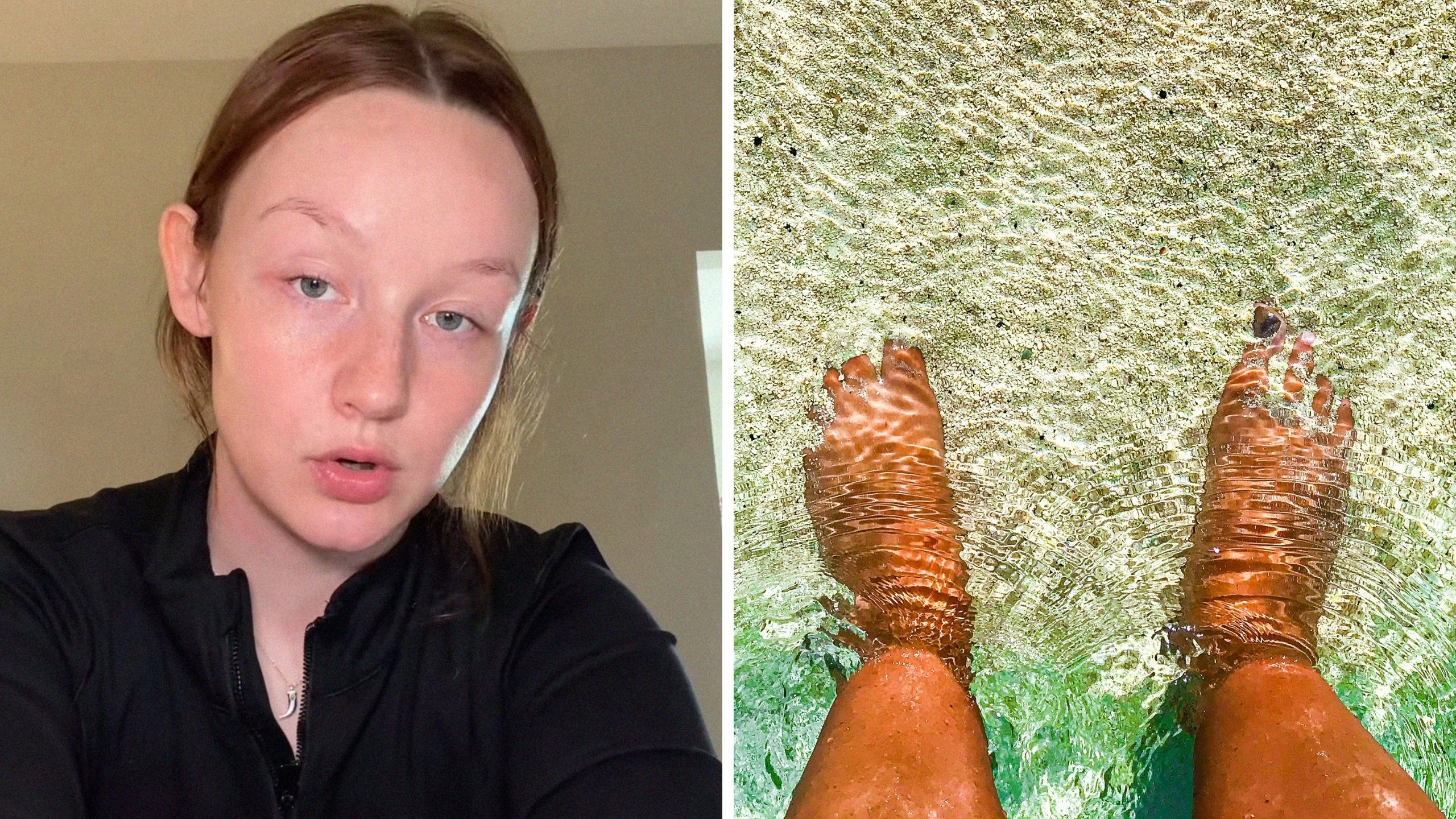
In a TikTok video posted by creator Jisella (@jisela888) she shares what happened to her on a beach vacation and offers some water safety tips for others to keep in mind.
Her terrifying tale has taken the internet by storm. As of this writing, it has over 10.9 million views.
What Happened To Her At The Beach?
Jisella says she was 14 years old when the incident happened during a family beach trip. At the time, she says she was walking out of the Gulf of Mexico when something wrapped around her leg.
“This thing that wrapped around my leg ended up giving me multiple disabilities,” she says.
According to Jisella, she had been stung by a Portuguese man o’war.
“The poison went all the way until right below my heart,” she says. “It felt like fire being injected into my veins and like knives stabbed into my feet and dragged all the way up my body.”
Jisella describes this as “easily the worst experience” of her life and says she is trying to help others avoid going through the same thing.
One clue that beachgoers should pay attention to, she says, is if they see these creatures on the shore.
“If you see a multitude of Portuguese man o’ war on the beach,” she says, explaining they’re the color of blue glass. “Please, and I’m begging you, do not go in the water. It is not safe. They are not safe creatures to be around.”
Jisella says she considers herself lucky because she was standing in front of two younger children with their backs facing the water when the Portuguese man o’ war reached her.
“It could have been extremely dangerous if the size of the Portuguese man o’ war that got me got to the children,” she says.
At first, she says she mistook the creature for seaweed.
“I did feel it wrap around one leg,” she says. “I set the other one down thinking it was seaweed, and it ended up being a giant, grandfather, six-foot long, Portuguese man o’ war.”
How Did The Man O’ War Sting Affect Her Health?
Jisella says she’s still dealing with the effects of the sting. She has scars at the site of the sting, as well as in areas of her body where the venom made its way out.
“Not only did I have scars all down my legs… that were bloody and crusted, but they had to break back open, and the poison had to come back out,” she says. “It’s like poison ivy.”
Jisella says she would wake up at night covered in blood after scratching affected areas in her sleep. “It was a mess,” she says.
As scary as her story is, Jisella insists she doesn’t want to make people afraid of the ocean. Instead, she wants people to be more aware of what may be in the sea with them.
“I don’t think you should be scared of the beach,” she says. “I just think you should be aware that you’re in another home. You’re in another environment.”
Jisella adds that she is still dealing with the effects today.
“I still have doctor’s appointments, I still have medications I take,” she says. “But I would love to spread that word.”
How Dangerous Are Portuguese Man O’ Wars?
Portuguese man o’ wars are often confused with jellyfish, but the carnivorous animal is actually a siphonophore, made up of a colony of organisms working together.
The name, according to Britannica, comes from their resemblance to warships built in Portugal in the 15th century. They can be identified by their transparent floats that are usually tinted pink, blue, or purple.
According to the Australian Museum, about 10,000 to 30,000 stings happen in the country each year along the nation’s east coast. The publication notes that no fatalities have been confirmed from the species most commonly encountered there.
However, some people are more susceptible to having a serious reaction to a sting, such as children or the elderly. For most people, the main symptom is intense pain. Itching is also common and may last a week, followed by ulcers. A sting can leave marks that develop into permanent scarring.
Man o’ wars are commonly found in warm tropical and subtropical waters, including parts of the Atlantic, Indian, and Pacific Oceans, and they can sometimes wash up on beaches in large numbers.
Viewers Share Their Experiences
“As a Gulf of Mexico native/local, purple flag is way scarier than double red,” one commenter wrote.
“Born and raised in South Florida; there’s always Portuguese man o war on the beach,” another shared.
“My fear of the ocean solidifies more and more every day,” stated a third.
Jisella did not immediately respond to a request for comment.
@jisella888 this is SO important to me plz lmk if you have any questions #safety #beachsafety #portuguesemanowar #bluebottle #beach ♬ original sound – JISELLA 🏄🏼♀️⭐️